Carels Buttler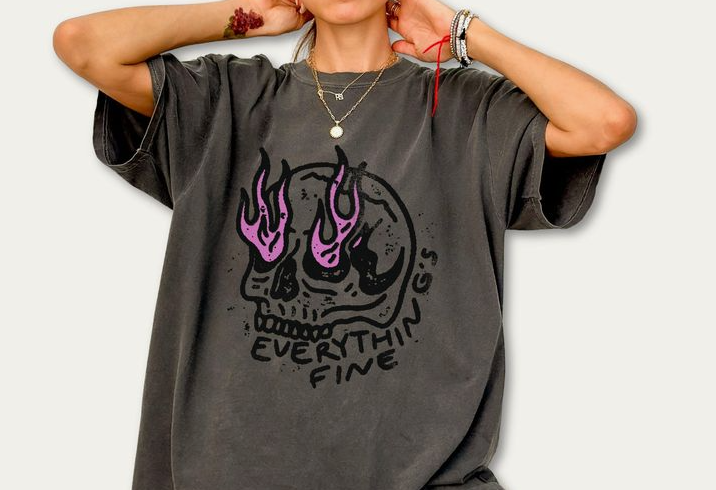
For most of the last decade, minimalism ran the fashion world. Plain tees, tiny chest logos, muted palettes, and clean sans-serif fonts filled every rack from luxury brands to fast-fashion chains. Somewhere around 2023, the pendulum started to swing back the other way. Loud graphics, oversized prints, wild typography, and heavy illustration are winning again, and the sales numbers are following. There is a reason for this, and it goes deeper than fashion cycling through its own trends.
The Minimalist Era & Why It Faded
The rise of minimalism was tied to a specific cultural moment. Social media was still new, personal branding was in its early days, and people wanted to look put-together in a way that photographed well. A clean tee with a small logo said “I have made it” without saying anything else. The look worked because it was safe and easy to buy into at every price point.
The problem is that when everyone is minimalist, minimalism stops meaning anything. A plain white tee stops being a statement and becomes wallpaper. Once every brand is doing the same thing, the customers who care about style start looking for the next signal.
The Return of Personality
The shift back to loud graphics is a direct response to that flattening. When the whole room is dressed the same, the person wearing a wild illustration or a heavy piece of typography stands out without having to say a word. Loud design gives people back something minimalism took away, which is the ability to signal personality through what they wear.
Why Bold Graphics Actually Sell
The bold graphic tee trend is not just about aesthetics. It taps into a few things that are baked into how people process visual information and how they buy clothes.
Attention in an Attention Economy
Human eyes are wired to notice contrast and pattern. A tee with a heavy graphic pulls focus in a way a plain tee never will, and in a world where every retail environment is fighting for attention, that pull matters. Shoppers spend more time looking at bold designs on the rack, and more time looking translates directly into more sales.
Identity Signaling
A graphic tee tells the room something about who you are without you having to introduce yourself. It signals your taste, your sense of humor, your subculture, or your point of view. That is powerful, and it is exactly what a plain tee cannot do. Bold graphics let people wear their personality on the outside, which is a strong pull for anyone in an age group where identity matters.
Conversation Starters
Loud graphics generate reactions. People point at them, ask where you got them, and start conversations about them. Every one of those interactions turns the shirt into free marketing for the brand, and buyers know it. Wearing a shirt that gets a laugh, a compliment, or a question is a small form of social capital, and people are willing to pay for that.
What “Bold” Means Now Versus Then
The bold graphic tee trend of the 2020s does not look like the loud graphic tees of the early 2000s. That era leaned on rhinestones, glossy prints, and big-name logos plastered across the chest. The new bold is different. It leans on original illustration, custom typography, matte or textured prints, and designs that reward a second look.
Original Art Over Recycled Logos
Buyers can now tell the difference between a design a brand actually made and a design a brand licensed or ripped off. Original graphics win because they carry a point of view. A licensed cartoon character or a stolen meme has no story behind it, and people know it.
Textured & Layered Prints
Modern bold graphics also lean into texture. Hand-drawn line work, halftone shading, and layered ink give a shirt depth that a flat logo cannot match. That physical texture reads as effort, and effort reads as authenticity.
The Small Brands Leading the Shift
The bold graphic tee trend is being pushed hardest by independent streetwear brands, not by big-box retailers. Independent shops like Phatz Frog have built their entire catalogs around graphics that make people stop and look. The pieces are original, printed in-house, and designed to say something rather than fade into the background. That is a working model that big brands are still trying to match.
The advantage small brands have in this space is that they can move fast, take design risks, and put out artwork that would never survive a corporate marketing meeting. That freedom is exactly what the moment calls for, and the buyers who care about style have noticed.
Why the Trend Has Legs
Some trends come and go in a season. The bold graphic movement has stayed around longer than most because it is tied to something bigger than fashion. It is a reaction to a decade of flattening, algorithmic sameness, and personal branding fatigue. People are tired of looking like everyone else, and they are willing to buy clothes that push back against that.
For anyone building a wardrobe or a brand, the takeaway matters. Loud is not going away any time soon, and the buyers who once chased quiet luxury are now the same buyers pushing shopping carts full of graphic tees. Design that has a point of view is winning, and design that plays it safe is losing shelf space by the month.
The psychology behind the shift is simple. People want to be seen, they want to say something, and they want their clothes to work for them instead of just covering them. A bold graphic does all three at once, and that is why the trend has legs long after most trends fade.

 Daniel Jack