
 jhon reid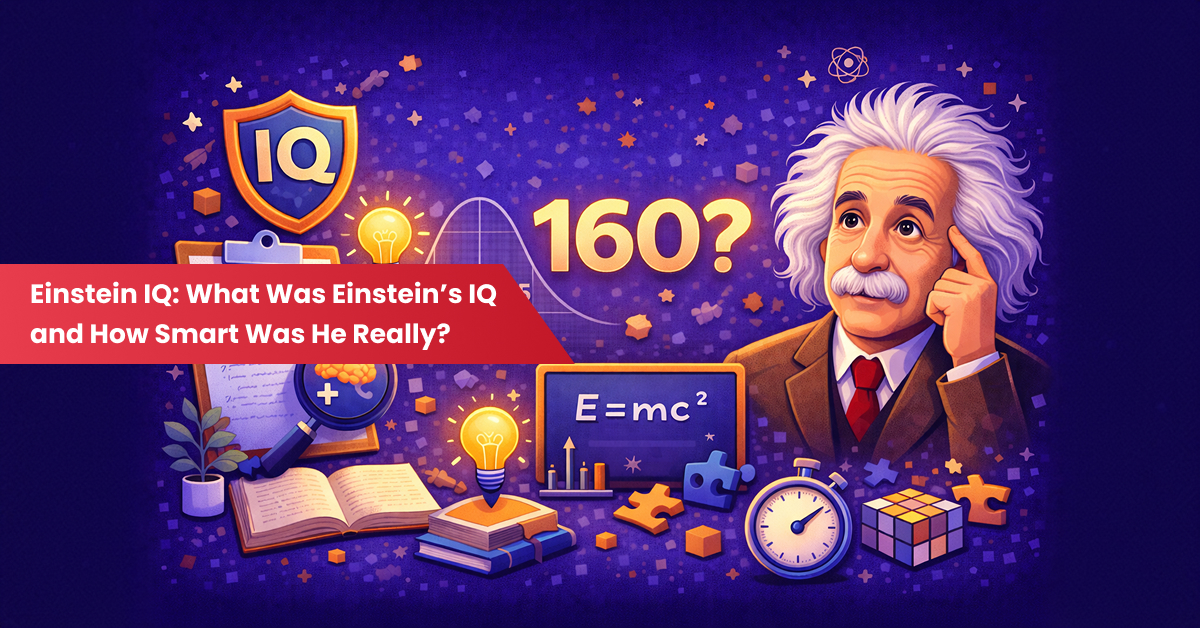
Few scientific figures are as universally recognized for intelligence as Albert Einstein. His name is almost synonymous with genius, and his theories reshaped how humanity understands space, time, and the universe itself. Because of this reputation, one question continues to appear again and again: what is Einstein’s IQ?
It is a simple question, but the answer is far from simple. While many websites claim exact numbers, the truth is more nuanced. Einstein never officially took a modern IQ test, and most figures associated with his intelligence are estimates rather than verified results. Understanding why this mystery exists requires exploring both his life and the way intelligence is measured.
Why People Are Curious About Einstein’s IQ
The fascination with Einstein’s intelligence comes from his extraordinary contributions to science. He developed ideas that changed physics forever, including the Theory of Relativity, which transformed how we understand gravity, time, and motion.
He also made significant contributions to quantum theory and was awarded the Nobel Prize in Physics for explaining the photoelectric effect.
Because his ideas were so revolutionary, people naturally try to quantify his intelligence in numerical form. IQ scores provide a simple way to compare individuals, which is why so many people ask what is Einstein’s IQ. However, intelligence is far more complex than a single number.
What Is IQ and How Is It Measured?
IQ stands for Intelligence Quotient. It is a score derived from standardized tests designed to measure cognitive abilities. These abilities typically include:
- Logical reasoning
- Pattern recognition
- Mathematical problem solving
- Verbal comprehension
- Spatial awareness
- Memory and processing speed
Modern IQ tests are structured so that the average score is 100. Most people fall between 85 and 115. Scores above 130 are often considered very high.
However, IQ tests are designed for modern populations and standardized conditions. They do not measure creativity, curiosity, emotional intelligence, or scientific imagination. These limitations are important when trying to understand historical figures like Einstein.
So What Is Einstein’s IQ?
The most commonly repeated estimates place Einstein’s IQ between 160 and 190. Some sources even claim higher numbers, but there is no scientific evidence supporting any exact value.
The key fact is this: Einstein never took a formal IQ test. Therefore, there is no recorded score.
Any number you see online is based on retrospective estimation rather than actual testing. These estimates are usually derived from his achievements, academic performance, and the complexity of his scientific work.
So when people ask what is Einstein’s IQ, the most accurate answer is that it is unknown and cannot be measured precisely.
Why Do Estimates Put His IQ So High?
Even though there is no official score, experts assume Einstein had extremely high cognitive ability. This assumption is based on several observable factors.
1. Revolutionary Scientific Thinking
Einstein introduced ideas that changed physics completely. His ability to challenge established scientific beliefs shows extraordinary intellectual capacity.
Before Einstein, scientists had very different views of space and time. His work unified them into a single framework that reshaped modern physics.
2. Advanced Mathematical Insight
Although popular myths suggest otherwise, Einstein was highly skilled in mathematics. He used complex mathematical tools to develop his theories.
His ability to connect abstract mathematics with physical reality was one of his greatest strengths.
3. Creative Thought Experiments
Einstein often used mental experiments, imagining scenarios such as traveling alongside a beam of light. These thought experiments helped him develop groundbreaking ideas without physical testing.
This ability demonstrates not just intelligence but also deep creative reasoning.
4. Problem Solving Beyond Traditional Methods
Einstein did not rely solely on conventional approaches. He often questioned assumptions and developed entirely new frameworks for understanding problems.
This independent thinking is a hallmark of exceptional intelligence.
Myths About Einstein’s Intelligence
Over time, many myths about Einstein have spread, especially online. These myths often exaggerate or simplify his abilities.
Myth 1: Einstein Failed Math
One of the most popular myths is that Einstein failed mathematics in school. This is false.
Historical records show that Einstein excelled in mathematics from a young age. He was ahead of his peers and mastered advanced concepts early.
Myth 2: IQ Fully Explains Genius
Another misconception is that IQ alone explains Einstein’s genius. In reality, IQ tests measure only specific cognitive abilities and do not capture creativity or innovation.
Einstein’s genius came from a combination of intelligence, imagination, curiosity, and persistence.
Myth 3: His IQ Was Officially Measured
There is no evidence that Einstein ever took a standardized IQ test. Any claimed number is purely speculative.
Why IQ Alone Cannot Explain Einstein’s Genius
Even if we assume Einstein had a very high IQ, it still does not fully explain his achievements.
Modern psychology shows that intelligence is multi-dimensional. Einstein’s success likely involved several factors beyond IQ.
Creativity
Einstein had the ability to imagine ideas that had never been considered before. Creativity allowed him to develop entirely new scientific frameworks.
Curiosity
He constantly asked deep questions about how the universe works. This curiosity drove his lifelong exploration of physics.
Persistence
Scientific breakthroughs often require years of effort. Einstein continued refining his theories despite challenges and criticism.
Independent Thinking
Einstein was not afraid to challenge established scientific beliefs. This intellectual independence allowed him to explore new directions.
How Einstein Compares to Other Scientists
People often compare Einstein’s estimated IQ to other historical figures in science and mathematics.
Common comparisons include:
- Isaac Newton: Often estimated around 190 to 200
- Nikola Tesla: Estimates vary widely and are not verified
- Stephen Hawking: Often estimated around 160
These numbers, like Einstein’s, are not based on actual IQ tests. They are speculative and should be treated cautiously.
Why People Still Ask “What Is Einstein’s IQ?”
The question remains popular because people want a simple explanation for extraordinary ability. A number feels concrete and easy to understand.
However, Einstein’s life shows that genius cannot be reduced to a single score. His contributions came from a unique combination of mental abilities and personal traits.
The question what is einstein’s iq is less about finding an exact number and more about understanding how genius works.
Intelligence Beyond Numbers
Modern research in psychology suggests that intelligence is more complex than traditional IQ scores suggest. Other forms of intelligence include:
Emotional Intelligence
The ability to understand and manage emotions.
Creative Intelligence
The ability to generate new ideas and think innovatively.
Practical Intelligence
The ability to apply knowledge in real-world situations.
Social Intelligence
The ability to understand and interact effectively with others.
Einstein’s achievements likely involved all of these forms of intelligence working together.
The Legacy of Einstein’s Mind
Regardless of his exact IQ, Einstein’s impact on science is undeniable. His theories are still used today in physics, astronomy, and technology.
For example, modern systems like GPS rely on principles from relativity to function accurately. His work continues to shape scientific research and technological development.
Einstein’s legacy is not defined by a number but by his lasting contributions to human knowledge.
Final Thoughts
So, what is Einstein’s IQ? The honest answer is that it is unknown. While estimates suggest a very high level of intelligence, there is no verified measurement.
More importantly, focusing on a number misses the true essence of Einstein’s genius. His intelligence was not just about problem solving ability but also creativity, imagination, and curiosity.
Einstein reminds us that genius cannot be fully measured. IQ scores may provide insight into certain cognitive abilities, but they do not define a person’s full intellectual potential.
In the end, Einstein’s legacy is not about a number but about ideas that changed the world forever.

 Print Professionals
 paulmark321 saurabh