Sonpal Singh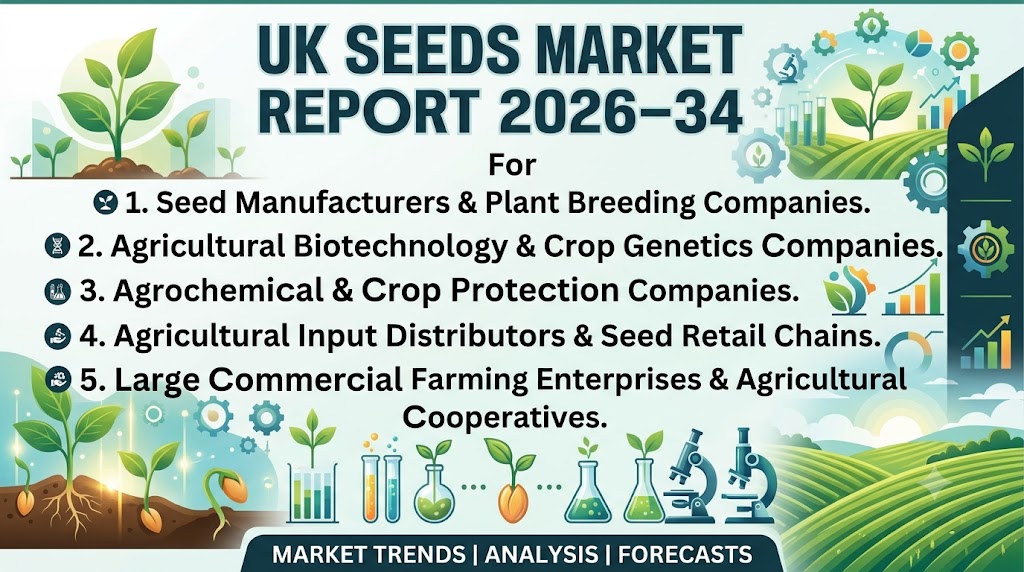
The financial and operational momentum backing alternative crop varieties and modernized seed procurement across the United Kingdom is grounded in reliable growth. According to the comprehensive industry data featured on the IMARC Group UK Seeds Market Report, the market reached a highly substantial valuation of USD 1.56 Billion in 2025.
The decade ahead points toward a steady, predictable climb. Powered by the commercialization of climate-resilient crop varieties and a national pivot toward sustainable farming systems, the total market volume is projected to reach USD 1.92 Billion by 2034. This trajectory represents a consistent compound annual growth rate (CAGR) of 2.33% during the strategic forecast period spanning from 2026 to 2034. For industry stakeholders, this upward trajectory highlights a stable yet highly innovative sector successfully aligning with long-term environmental targets.
Key Market Growth Drivers:
The current transformation of the UK crop production infrastructure is being accelerated by three primary structural catalysts:
- Advanced Precision Breeding Technologies Enabling Crop Innovation
The absolute cornerstone of the industry’s growth path is the implementation of the Genetic Technology (Precision Breeding) Regulations in November 2025. This historic legislative shift positions the UK as a prominent global hub for agricultural biotechnology. By differentiating precision-bred, gene-edited varieties from legacy genetic modification (GM) restrictions, the new regulatory framework permits researchers and commercial seed companies to introduce genetic alterations that could naturally occur or be achieved via traditional breeding methods.
This policy dramatically compresses breeding timelines that historically took decades. A clear example of this driver in action includes groundbreaking work at the John Innes Centre, where researchers successfully leveraged precision breeding to develop vitamin D-fortified tomatoes designed to accumulate elevated provitamin D3 concentrations to address widespread public health concerns.
- Climate Resilience and Food Security Imperatives
Escalating climate challenges – ranging from severe heatwaves and prolonged droughts to excessive, out-of-season rainfall – are driving urgent farm-level demand for resilient crop varieties. UK growers are heavily prioritizing certified varieties that guarantee winter hardiness, rapid early vigor, and lodging resistance to protect yield performance under volatile weather conditions.
National food security strategies are actively reinforcing this shift by encouraging domestic production to minimize reliance on complex import lines. Reflecting this trend, major providers like Cope expanded their domestic portfolios by introducing three high-yielding varieties to the AHDB Recommended List, including Everlong spring wheat (noted for exceptional specific weights), winter barley candidate Aretha (delivering early maturity), and high-yielding spring pea candidate Marler.
- Sustainable Agriculture and Regenerative Farming Program Expansion
Corporate net-zero mandates and changing consumer expectations are pushing massive investments into large-scale regenerative farming initiatives. These programs require specialized, robust seed varieties that exhibit high natural disease resistance, deep root systems for soil health, and strong competitive capability against weed populations within reduced-chemical input frameworks.
Major agri-food corporations are heavily investing in these supply-chain collaborations to achieve carbon sequestration goals. A notable example is ADM’s expansive regenerative agriculture program, which successfully enrolled over 260 British farmers to optimize oilseed rape and milling wheat cultivation while prioritizing local biodiversity enhancement.
Key Market Segmentation:
The inherent diversity of British farming requires a highly specialized product architecture to optimize outputs across different soil types and climates. The market is cleanly categorized by seed type, technical traits, procurement availability, and seed treatment methodologies.
Breakup by Type:
- Conventional Seeds: Holding a dominant 97% market share in 2025, conventional varieties remain the primary choice due to proven agronomic track records, widespread farmer familiarity, clear regulatory routes, and lack of consumer resistance.
- Genetically Modified Seeds: A highly restricted, niche category navigating ongoing European consumer and labeling frameworks.
Breakup by Seed Type:
- Cereals and Grains: Commanding the largest market share at 50% in 2025, fueled by substantial domestic wheat production volumes vital for milling and domestic food security, alongside expanding winter barley acreage for malting and animal feed.
- Oilseeds (including Canola/Rapeseed, Soybean, and Sunflower): A highly active segment; notably, the Agricultural and Horticultural Development Board (AHDB) highlights a nearly 30% projected rise in the UK’s cultivated area of oilseed rape for the 2025/26 season.
- Fruits and Vegetables: Comprising high-value specialty horticulture lines like tomatoes, onions, carrots, and brassicas.
Breakup by Traits:
- Herbicide-Tolerant (HT): Dominates with a clear 55% market share in 2025, as professional producers aggressively deploy HT traits alongside precision agriculture mapping to control tough weed infestations, lower manual field labor costs, and implement reduced-tillage conservation methods.
- Insecticide-Resistant (IR) & Others: Niche defense traits engineered to mitigate crop losses from insect vectors.
Sample Request For Your Business
Breakup by Availability:
- Commercial Seeds: Accounts for a significant 80% market share in 2025, reflecting how professional growers consistently favor certified seed purity, documented germination success rates, and direct agronomic backing over saved seed alternatives.
- Saved Seeds: Maintained primarily across small-scale organic cooperatives and heritage farms focused on seed sovereignty, as shown by niche entries like Winnow Farm Seeds launching heirloom collections in recycled cotton pouches.
Breakup by Seed Treatment:
- Treated Seeds: Expanding rapidly as farmers look to shield young seedlings from early pest pressures through ultra-precise chemical or biological seed coatings.
- Untreated Seeds: Primarily supporting the certified organic farming sector, which strictly avoids synthetic applications.
Breakup by Region:
Geographically, seed distribution and varietal demand vary based on regional climates, topography, and industrial specialization across the United Kingdom:
- East of England & South East: Together, these regions form the premier arable heartland of the UK. Driven by rich sandy loam soils and structured agricultural distribution channels, these zones lead in high-yielding winter wheat, malting barley, and commercial oilseed rape cultivation.
- London: Focuses on peri-urban horticulture, urban allotment innovations, community farming programs, and hosting advanced biotechnology research facilities.
- North West & South West: Characterized by higher rainfall and rolling topography, these regions heavily prioritize high-productivity forage seed mixtures, ryegrass cultivars, and herbal leys to support intensive dairy, beef, and livestock rotational grazing systems.
- Scotland: Holds a vital strategic position within the international market, leveraging its cooler northern climate and minimal aphid pressure to serve as the main source for premium, disease-free certified seed potato multiplication programs.
- West Midlands, East Midlands, & Yorkshire and The Humber: Highly productive agricultural belts combining extensive cereal milling grain networks with advanced crop rotation configurations.
Competitive Landscape: Market Dynamics
The competitive environment across the UK is characterized by strategic distribution partnerships, high R&D requirements, and ongoing adaptations to complex post-Brexit phytosanitary border inspections. Agrochemical multinationals and independent regional plant breeding companies are increasingly focusing on specialized trait development, localized multi-region field trials, and full transparency within the supply chain.
To maintain market share, industry leaders are continuously forming alliances with food processors and farm groups, offering complete agronomic support packages alongside high-purity seed varieties to secure long-term buyer loyalty.
Recent News: Corporate Action and Sustainable Alliances
Recent corporate developments and field trials showcase the rapid commercialization of alternative farming programs across England and Scotland:
- Pioneering Industrial Field Trials: Showcasing a direct path toward modern food safety, a massive field trial led by the British On-Farm Innovation Network (BOFIN) launched across 25 commercial farms. The initiative evaluates newly precision-bred wheat varieties engineered to minimize acrylamide formation during industrial baking processes.
- Supply Chain Sustainability Projects: Highlighting corporate engagement in regenerative systems, Unilever launched an extensive UK sustainable agriculture project in collaboration with English Mustard Growers and Norfolk Mint Growers. The initiative integrates cover cropping, low-carbon fertilizers, and automated precision irrigation loops to feed into the iconic Colman’s brand supply chain.
About Us:
IMARC Group is a global management consulting firm that helps the world’s most ambitious changemakers to create a lasting impact. The company provide a comprehensive suite of market entry and expansion services. IMARC offerings include thorough market assessment, feasibility studies, company incorporation assistance, factory setup support, regulatory approvals and licensing navigation, branding, marketing and sales strategies, competitive landscape and benchmarking analyses, pricing and cost research, and procurement research.
Contact Us:
IMARC Group‚
134 N 4th St‚ Brooklyn‚ NY 11249‚ US
Email: sales@imarcgroup․com
Tel No: (D) +91 120 433 0800
United States: (+1–201–971–6302)


 Jatinder Singh
 Freya Parker