Katie Williams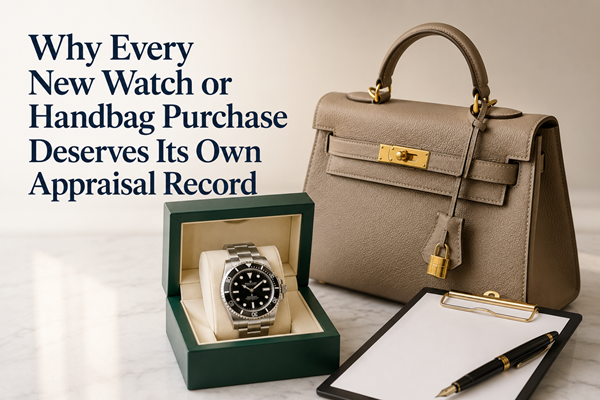
There’s a specific moment every serious collector eventually recognizes: the point where “a few lovely pieces” quietly become “a collection.” It usually happens gradually when maybe a Rolex is bought to mark a milestone, a Hermès bag is acquired a year later, and another watch is added because the right one comes up at the right price. Somewhere in that accumulation, most people stop thinking of each piece individually and start treating the whole thing as one asset. That shift is precisely where risk creeps in, because insurers, appraisers, and the market itself never stop treating each item individually.
H2: The Collector’s Blind Spot: Treating New Purchases as “Already Documented”
A Receipt Isn’t an Appraisal
It’s an easy mistake to make: you buy a new watch or bag, keep the receipt, and assume that’s enough documentation if something goes wrong. But in reality, it isn’t. A receipt tells an insurer what you paid on a specific date, but it says nothing about the item’s current replacement value and nothing about the distinguishing details that make a specific piece identifiable if it’s ever lost or stolen. A proper appraisal exists precisely to fill that gap, and it needs to happen for each “item,” not as a general update to “the collection.”
Why Value Can Move Almost Immediately
This matters more for some categories than others. A Rolex, for instance, can shift in value not long after purchase, driven by secondary-market demand rather than anything to do with condition or age. Waiting years to get a new watch properly appraised means insuring it against a number that may already be out of date the moment you bring it home.
H2: Rolex Appraisal: Why Even a Brand-New Watch Needs One
What a Proper Watch Appraisal Actually Documents
A Rolex appraisal, like any proper watch appraisal, goes well beyond confirming the model exists. It documents the watch’s design, the metal from which it is made, its model number, and its identification number—details specific enough that the watch could be identified precisely, rather than being described generically as ‘a Rolex’ if it were ever lost or stolen. That level of specificity is exactly what an insurer needs to process a claim without dispute, and it’s not something a sales receipt provides.
Vintage to Contemporary: the Appraisal Approach Isn’t One-Size-Fits-All
Whether the watch in question is a brand-new release or a decades-old vintage piece, the appraisal still needs to reflect its specific market position. Working with an appraiser experienced across vintage-to-contemporary timepieces matters here, since the factors driving value differ significantly between a current-production watch and a discontinued vintage reference.
Protecting the Documentation, Not Just the Watch
A proper watch appraisal includes photographing not just the watch itself but any accompanying stuff as well, such as the box, papers, and warranty card. This matters more than people expect, because these items are frequently misplaced or lost alongside the watch itself in a theft. Documenting them separately, at the point of appraisal, means that the record survives even if the physical paperwork doesn’t.
H2: Handbag Valuation: A Different Set of Factors Every Time
What Actually Determines a Handbag’s Value
Handbag valuation runs on a genuinely different set of criteria than a watch, which is precisely why each new bag needs its own assessment rather than folding into an existing valuation. Brand prestige plays a significant role from the outset, but within that, whether a specific model is iconic or limited edition changes the number considerably compared to a standard piece from the same house. The type of leather significantly affects the bag’s value, and the condition is one of the most immediate factors; visible wear, scratches, or damage directly reduce the assessed value. This practice is why appraising a bag close to the time of purchase, when it is in its best condition, provides a more accurate baseline than waiting for years.
Documentation Requirements Reset with Every Bag
For each handbag, a receipt is required to confirm the piece is genuine and establish what was paid. Keeping the original box and accompanying documentation together with the bag increases its assessed value, meaning every new purchase effectively starts its documentation trail. A collector with five bags doesn’t have one bundle of paperwork; they have five separate records, each needing to be built individually.
H2: Why a Growing Collection Needs a System, Not Guesswork
Agreed Value: A Better Fit as a Collection Grows
For collectors with significant holdings, working on an “agreed value” basis is often a more appealing structure, since it removes ambiguity about what a specific piece is insured for, decided in advance rather than argued over after a loss.
Discretion Matters as a Collection Becomes Visible
As a collection grows, so does the sensitivity around discussing it. A private, discreet appraisal relationship matters more the larger and more valuable a collection becomes.
Summing Up
To sum up, obtaining a valuation is crucial, particularly for watches and handbags. Having detailed documentation helps ensure that the owner is aware of the asset’s real current worth, and in case of unforeseen circumstances, the documentation aids in swiftly identifying the asset.


 IWC Probate Will Services
 Daniel Jack