Martin L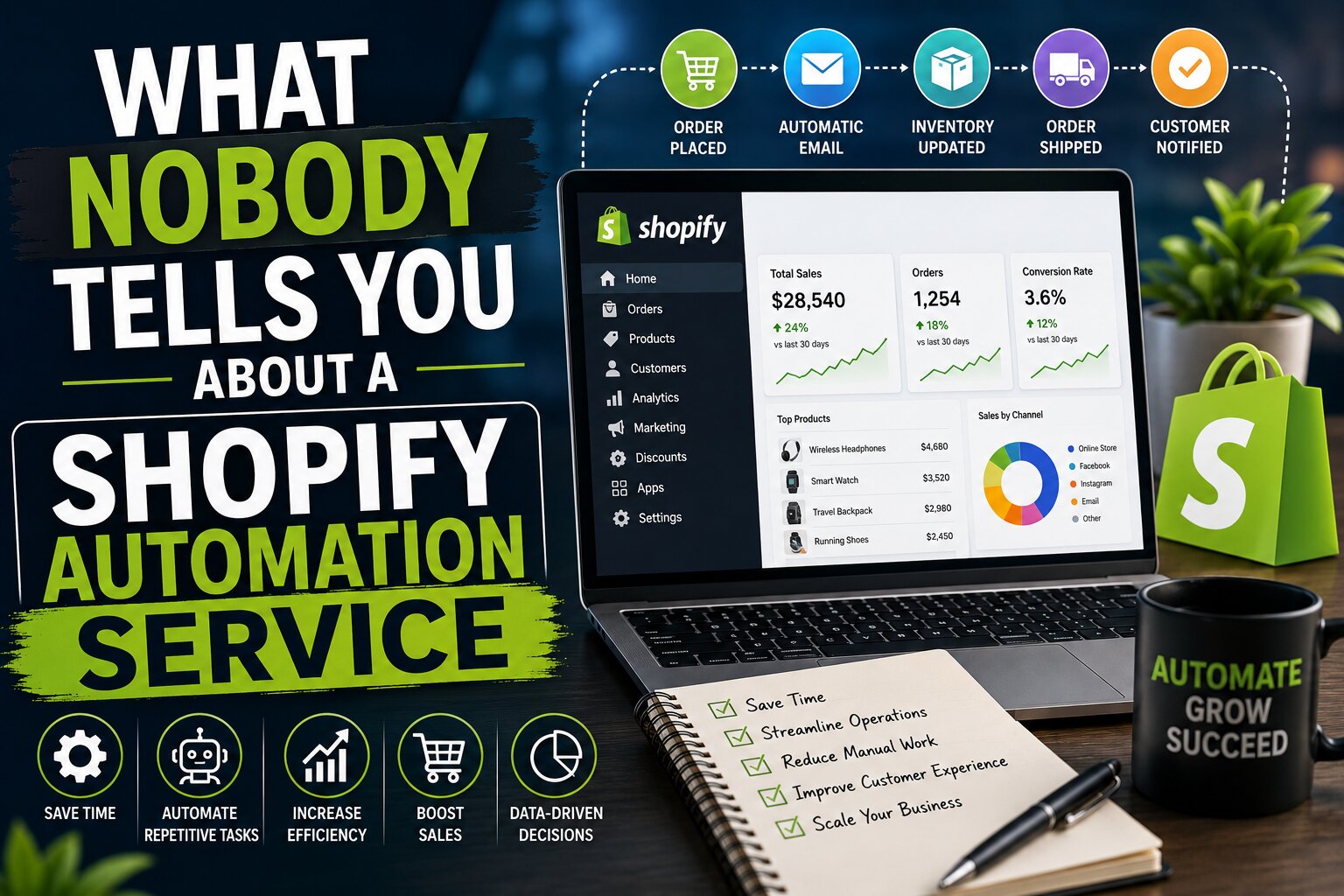
Running a Shopify store can look easy from the outside.
You choose a product, build a website, add a few payment options, and wait for customers to arrive. But anyone who has managed an online store knows the reality is very different. Behind every successful store are countless small tasks that need attention every day.
Orders must be processed. Inventory needs monitoring. Customer questions require answers. Product information must stay accurate. Marketing campaigns need tracking, and store performance needs regular review.
As the workload grows, many entrepreneurs start looking for ways to simplify their operations. This is where a Shopify automation service enters the conversation.
Automation can help reduce repetitive work and create more efficient workflows. A Shopify automation agency may also help businesses organize their operations and implement systems that reduce manual effort.
But there are several things about Shopify automation that people often discover only after they start using it.
Automation is useful, but it is not magic. It does not guarantee sales, eliminate business risks, or replace the need for human decision-making.
So, what does nobody tell you about a Shopify automation service?
Let’s explore the reality behind automation and the lessons every Shopify entrepreneur should understand.
What Is a Shopify Automation Service?
A Shopify automation service typically refers to technology, software, or professional support designed to automate repetitive tasks involved in operating an online store.
Depending on the tools and systems being used, automation may assist with:
- Order processing
- Inventory updates
- Customer notifications
- Product data management
- Email marketing
- Reporting
- Workflow management
The purpose is simple: reduce unnecessary manual work.
Instead of spending hours repeating the same tasks, store owners can use automated workflows to handle routine processes.
However, automation does not mean the store can operate without human involvement.
Business owners still need to make strategic decisions, review performance, monitor customer satisfaction, and respond to unusual situations.
The Biggest Myth: Automation Means You Can Forget About Your Store
One of the biggest misconceptions about Shopify automation is that once everything is automated, the business can run entirely on its own.
That is not realistic.
A successful Shopify store still needs attention.
Someone needs to:
- Monitor sales
- Review inventory
- Analyze customer behavior
- Check marketing performance
- Resolve complex customer issues
- Update products
- Adjust business strategies
Automation can reduce repetitive work, but it cannot replace business ownership.
The goal should be to create a store that is easier to manage—not a store that never needs attention.
Automation Can Save Time, but Time Must Be Used Wisely
Time savings are one of the most attractive benefits of automation.
Imagine manually sending order confirmations, updating inventory, organizing customer information, and reviewing reports every day.
These tasks may seem small individually, but together they can consume many hours.
A Shopify automation service can streamline some of these processes.
The important question is what you do with the time you save.
Entrepreneurs can redirect their time toward:
- Product research
- Marketing strategy
- Customer relationships
- Business planning
- Content creation
- Store improvements
Automation becomes valuable when saved time is invested in activities that require creativity and judgment.
The Role of a Shopify Automation Agency
A Shopify automation agency may help businesses identify repetitive tasks and develop workflows to manage them more efficiently.
Depending on the agency and its services, support may involve:
- Store workflow analysis
- Automation setup
- App integration
- Inventory processes
- Customer communication
- Reporting systems
However, services vary considerably.
Business owners should understand exactly what they are receiving before choosing an agency.
Important questions include:
- What tasks will be automated?
- Which tools will be used?
- Who will manage the system?
- What happens if an automation fails?
- How will performance be measured?
- What responsibilities remain with the store owner?
Clear answers can prevent misunderstandings and help entrepreneurs make better decisions.
Automation Does Not Guarantee Sales
This is another important reality.
A beautifully automated Shopify store can still struggle to generate sales.
Why?
Because automation does not automatically create demand.
Customers still need a reason to buy.
Sales depend on factors such as:
- Product quality
- Pricing
- Market demand
- Brand trust
- Marketing
- Customer experience
A Shopify automation service can improve operational efficiency, but it cannot guarantee that shoppers will choose your products.
Entrepreneurs still need to understand their market and create compelling offers.
Product Selection Still Matters
Automation cannot fix poor product choices.
If a product has weak demand, excessive competition, or poor margins, automating the sales process will not solve the underlying problem.
Successful Shopify entrepreneurs spend time understanding their customers.
They ask questions such as:
- What problems does the product solve?
- Who is the target customer?
- Why would someone choose this product?
- What makes the offer different?
- Is the pricing competitive?
Technology can help collect and organize information, but humans still need to interpret that information.
Customer Experience Is Still a Human Responsibility
Automation can improve customer communication.
For example, automated emails can confirm:
- Orders
- Shipping updates
- Delivery notifications
- Abandoned carts
These workflows improve communication and reduce repetitive work.
However, customers sometimes face situations that require personal attention.
A buyer may receive the wrong product, experience a delivery problem, or have a question that an automated response cannot answer.
In these situations, human support matters.
The best customer experience combines automation for routine communication with personal attention when customers need it.
Inventory Management Requires More Than Automation
Inventory is one of the most important parts of eCommerce.
Too much inventory can tie up cash and increase storage expenses.
Too little inventory can lead to missed sales and frustrated customers.
Automation can help monitor stock levels and provide notifications when inventory reaches certain thresholds.
However, store owners still need to understand:
- Seasonal demand
- Supplier lead times
- Product trends
- Sales patterns
- Reordering schedules
Automation provides information, but humans must decide how to respond.
Data Is Powerful Only When You Understand It
Shopify stores generate a huge amount of information.
Store owners can track:
- Sales
- Conversion rates
- Traffic
- Customer behavior
- Average order value
- Product performance
Automation can make it easier to collect and organize this information.
But data alone does not create growth.
Entrepreneurs need to interpret the numbers.
For example, if traffic increases but sales remain flat, the problem may be related to product pages, pricing, checkout experience, or customer trust.
The numbers tell you what is happening.
Human analysis helps determine why.
Automation Can Make Scaling Easier
One of the strongest reasons businesses adopt automation is scalability.
As a store grows, manual processes become increasingly difficult to manage.
A business with 20 daily orders may handle operations manually.
A business with thousands of daily orders needs more structured systems.
A Shopify automation service can help businesses build workflows that handle larger workloads more efficiently.
This may include automated inventory updates, customer notifications, reporting, and other repetitive processes.
However, scaling should happen carefully.
Growing too quickly can create problems with inventory, customer service, cash flow, and fulfillment.
Automation supports scalability, but it does not replace a thoughtful growth strategy.
Automated Systems Still Need Monitoring
Another thing people often overlook is that automation can fail.
Software may experience errors.
Apps may stop communicating correctly.
Data may become inaccurate.
A workflow may behave differently after a platform update.
This is why automated systems need regular monitoring.
Store owners should:
- Review workflows
- Check data accuracy
- Test important processes
- Monitor unusual activity
- Update integrations when necessary
Automation reduces manual work, but it does not eliminate responsibility.
The Financial Side of Automation
Automation tools can reduce labor and save time, but they may also create additional costs.
Businesses may pay for:
- Shopify apps
- Software subscriptions
- Professional services
- Custom integrations
- Maintenance
These expenses should be evaluated carefully.
The goal is not to automate everything.
The goal is to automate the right things.
A business should consider whether the time saved and efficiency gained justify the ongoing cost.
Not Every Task Should Be Automated
Automation works best when applied to repetitive and predictable processes.
Tasks that often benefit from automation include:
- Routine notifications
- Inventory updates
- Data collection
- Basic reporting
- Order confirmations
Other responsibilities require human judgment.
These may include:
- Brand strategy
- Product selection
- Supplier negotiations
- Customer conflict resolution
- Marketing decisions
The smartest businesses understand the difference.
They automate repetitive work while keeping important decisions in human hands.
Choosing the Right Automation Approach
Entrepreneurs considering a Shopify automation agency should focus on their actual business needs.
Before investing in automation, identify the tasks that consume the most time.
Ask:
- Which processes are repetitive?
- Which tasks cause frequent errors?
- Where do customers experience delays?
- Which activities prevent the team from focusing on growth?
Once these problems are identified, businesses can choose automation solutions that address real challenges.
This approach is often more effective than automating processes simply because technology is available.
The Future of Shopify Automation
Automation will likely become even more important as eCommerce continues to evolve.
Artificial intelligence and advanced software may help businesses with:
- Customer personalization
- Demand forecasting
- Inventory predictions
- Marketing analysis
- Customer support
- Business reporting
These technologies may improve efficiency and help entrepreneurs make better decisions.
However, human involvement will remain important.
Customers still value authenticity.
Businesses still need creativity.
Entrepreneurs still need judgment.
The future of eCommerce will likely involve a combination of intelligent technology and human decision-making.
Final Thoughts
The biggest lesson nobody tells you about a Shopify automation service is that automation is not a replacement for running a business.
It is a tool that helps you run the business more efficiently.
Automation can reduce repetitive work, improve organization, streamline customer communication, and make scaling easier.
But it cannot guarantee sales.
It cannot replace product research.
It cannot eliminate competition.
And it cannot make every business decision for you.
A Shopify automation agency may help businesses create efficient systems, but entrepreneurs should remain involved in important decisions and understand how their automated processes work.
The most successful approach is to find the right balance.
Automate tasks that are repetitive and predictable. Keep human attention on activities that require creativity, empathy, strategy, and judgment.
When technology and human expertise work together, Shopify automation becomes more than a way to save time. It becomes a practical method for building a more organized, responsive, and scalable eCommerce business.
Frequently Asked Questions
What is a Shopify automation service?
A Shopify automation service helps streamline repetitive store tasks through technology, software, or structured workflows. These may include inventory updates, customer notifications, order processes, and reporting.
Does Shopify automation guarantee more sales?
No. Automation can improve efficiency but does not guarantee sales. Revenue still depends on product demand, pricing, marketing, customer experience, and overall business strategy.
What does a Shopify automation agency do?
A Shopify automation agency may help businesses identify repetitive tasks and create automated workflows using software, integrations, and specialized tools.
Is Shopify automation suitable for small businesses?
Yes. Small businesses can benefit from automation when they use it to reduce repetitive tasks and save valuable time. However, businesses should choose tools that match their actual needs and budget.
Can Shopify automation replace employees?
Automation can reduce the need for some repetitive manual tasks, but it does not replace human judgment, creativity, customer empathy, or strategic decision-making.
What should I automate first in my Shopify store?
Start with repetitive tasks that consume significant time,


 Jack Ellis