Alliedway India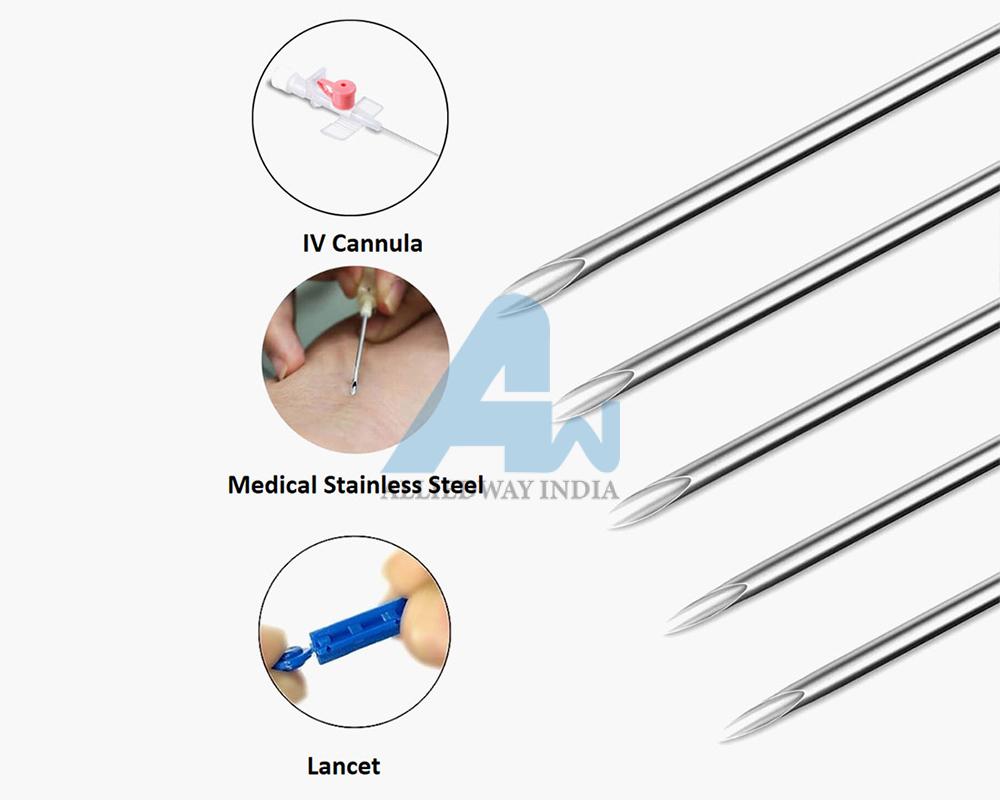
Overview – Stainless steel resists corrosion, but that resistance isn’t automatic or permanent. A stainless steel cannula that’s poorly manufactured, welded incorrectly, or finished with a rough surface can still corrode in use, and in a medical device, that’s not a cosmetic problem.
This blog covers:
- Introduction
- What Actually Causes Corrosion in a Stainless Steel Cannula
- How Manufacturers Prevent Corrosion During Production
- What This Means for Product Reliability
- Built on Precision and Quality Control
- Frequently Asked Questions
Introduction
“Stainless” doesn’t mean immune. It means resistant, and that resistance depends entirely on the grade of steel used, how it’s processed, and how the surface is finished. A stainless steel cannula that skips any of these steps can develop pitting, staining, or rust spots well before its expected service life, which matters a great deal in a device that comes into direct contact with patients.
What Actually Causes Corrosion in a Stainless Steel Cannula?
Stainless steel resists corrosion because of a thin, invisible layer of chromium oxide that forms on its surface and protects the metal underneath. Corrosion happens when that layer is compromised. A few things typically cause it:
- Chromium carbide precipitation – if the steel is heated incorrectly during manufacturing, particularly during welding, chromium can bond with carbon and pull away from the surface layer, leaving that area less protected.
- Surface imperfections – scratches, burrs, or rough machining marks create weak points where the protective layer is thinner or broken, giving corrosion a place to start.
- Chloride exposure – saline solutions, blood, and cleaning agents all carry chlorides, which are particularly aggressive at breaking down the protective oxide layer if the steel grade or finish isn’t suited to repeated exposure.
- Contamination during manufacturing – iron particles from tooling or handling can embed in the surface and rust independently of the stainless steel itself, creating visible spotting that looks like the cannula itself is corroding.
None of these are inevitable. They’re the result of shortcuts somewhere in the manufacturing process.
How Manufacturers Prevent Corrosion During Production?
Corrosion resistance is built in during manufacturing, not added afterwards. A few practices make the biggest difference:
- Using the right grade of steel – medical-grade stainless steel is selected specifically for its corrosion resistance and biocompatibility, and substituting a lower grade to cut costs is one of the most common causes of premature failure.
- Passivation – a chemical treatment that removes free iron from the surface and strengthens the natural chromium oxide layer, giving the metal significantly better resistance to pitting and staining.
- Electropolishing – smooths the surface at a microscopic level, removing the tiny burrs and imperfections where corrosion tends to start, while also making the surface easier to clean and sterilize.
- Controlled welding and heat treatment – keeping temperatures within the right range during any joining process avoids chromium carbide precipitation and keeps the protective layer intact across the whole part.
- Clean manufacturing environments – separating stainless steel processing from carbon steel tooling and handling prevents the kind of iron contamination that causes surface rusting unrelated to the base material.
Together, these steps are what separate a cannula that holds up through its full service life from one that starts showing corrosion within weeks of use.
What This Means for Product Reliability?
For a device that goes into direct or near-direct contact with a patient, corrosion isn’t just a durability question, it’s a safety one. A pitted or corroded surface is harder to clean and sterilize effectively, since bacteria can collect in microscopic surface defects that a smooth, properly passivated surface wouldn’t have. It also affects mechanical performance. A cannula’s tip needs to stay sharp and consistent, and any degradation at the surface level can affect how cleanly it penetrates tissue.
This is also where bevel quality and finish come into the picture. A properly finished stainless steel cannula, with a clean multi-bevel tip and no burring, isn’t just about ease of use. That same finish quality is part of what keeps the surface corrosion-resistant over the product’s working life.
Built on Precision and Quality Control
Alliedway India, based in Faridabad, Haryana, has been manufacturing medical-grade stainless steel components since 2003. As a leading manufacturer of stainless steel cannulas in India, Alliedway manufactures cannulas with 3, 5, and 7 bevel tip options; no-burr finishing; and multiple tip and handle configurations, including Mercedes, Lantern, Barber’s Pole, and Luer Lock styles, all engineered for high accuracy and reliable performance. For specifications and bulk requirements, please contact the Alliedway India team.
Frequently Asked Questions
Does a higher bevel count affect corrosion resistance?
Not directly. Bevel count mainly affects penetration and comfort during use. Corrosion resistance comes down to steel grade, passivation, and surface finish quality rather than the number of bevels ground into the tip.
Can a stainless steel cannula be reused safely if it shows minor surface discoloration? Discoloration usually signals that the protective oxide layer has been compromised in some way, and reuse of medical-grade instruments is governed by sterilization protocols and manufacturer guidance regardless of surface appearance. Any visible corrosion is a sign the device should be assessed before further use.
Is 316L stainless steel always better than 304 for cannulas?
316L generally offers better corrosion resistance, particularly against chlorides, which makes it a common choice for medical applications with repeated fluid exposure. The right grade still depends on the specific application and sterilization method being used.
How can I tell if a cannula was properly passivated during manufacturing?
It isn’t something visible to the eye in most cases. Reputable manufacturers test and certify passivation as part of their quality control process, so checking for that documentation is more reliable than visual inspection alone.


 Pmg India
 cortiez shop