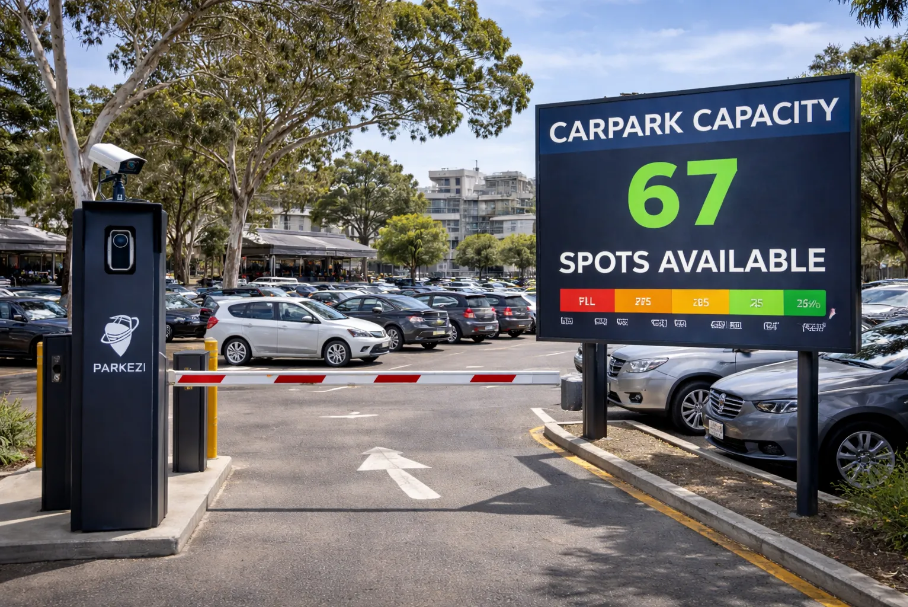
Why Smart Parking Is Becoming a Competitive Advantage for Commercial Properties

Nobody Complains About Good Parking. They Only Remember Bad Parking.

It usually starts with something small.

A visitor arrives five minutes early for a meeting. However, they spend the next ten minutes trying to enter the car park because the intercom is not working.

A delivery driver queues behind several vehicles while someone manually opens the boom gate. Office staff lose access cards. Tenants forget PIN codes. By 8:30 on a Monday morning, there is already a line of cars stretching onto the street.

None of these problems seems particularly dramatic on its own.

However, together they shape how people experience a building before they even step through the front door.

For years, commercial parking was treated as basic infrastructure. If there were enough spaces and vehicles could enter and exit, the system was considered successful.

Today, that is no longer enough.

Commercial property has evolved. Tenant expectations have evolved too.

Property owners now invest heavily in premium lobbies, end-of-trip facilities, advanced security systems and sustainable building technology because they understand that every detail contributes to the value of an asset.

Parking deserves exactly the same attention.

It is no longer simply a place to leave a vehicle. Instead, it is the first interaction tenants, employees, contractors and visitors have with a property.

When the experience feels seamless, people rarely notice.

When it does not, it quickly becomes the first complaint.

Commercial Buildings Have Become Smarter. Parking Needs to Keep Up.

Walk through a modern commercial building today and technology is everywhere.

Lighting adjusts automatically based on occupancy.

Air-conditioning responds to changing temperatures.

Security systems instantly recognise authorised users.

Meeting rooms are booked through mobile apps.

Despite these improvements, many parking systems still operate almost exactly as they did fifteen years ago.

Plastic swipe cards.

Paper tickets.

Manual visitor registers.

Standalone boom gates.

The rest of the building has embraced digital technology, but parking often remains disconnected from that progress.

As buildings become smarter, tenants naturally expect parking to offer the same level of convenience.

They already unlock offices with smartphones.

They schedule deliveries online.

They manage workplace services digitally.

Searching for a lost parking ticket suddenly feels outdated.

This is exactly where smart parking is making a significant difference. Modern smart parking systems integrate with existing building technology, creating a smoother experience for everyone using the property.

Parking Quietly Influences Tenant Retention

Property managers spend significant time focusing on lease renewals, maintenance requests and building performance.

Parking rarely becomes a priority until something goes wrong.

However, that daily parking experience influences how tenants feel about the entire property.

Imagine arriving at work every morning.

If access is smooth, vehicles move efficiently and parking simply works, nobody gives it another thought.

Now imagine the opposite.

Boom gates regularly fail.

Visitors struggle to enter.

Queues form during busy periods.

Contractors repeatedly call reception asking someone to grant access.

Over time, these small frustrations become part of the tenant experience.

Very few businesses relocate solely because of parking.

However, poor parking contributes to the broader perception that a building is becoming more difficult to use.

Good parking supports tenant satisfaction quietly.

Smart parking supports it even better.

It Is Not About More Parking Spaces
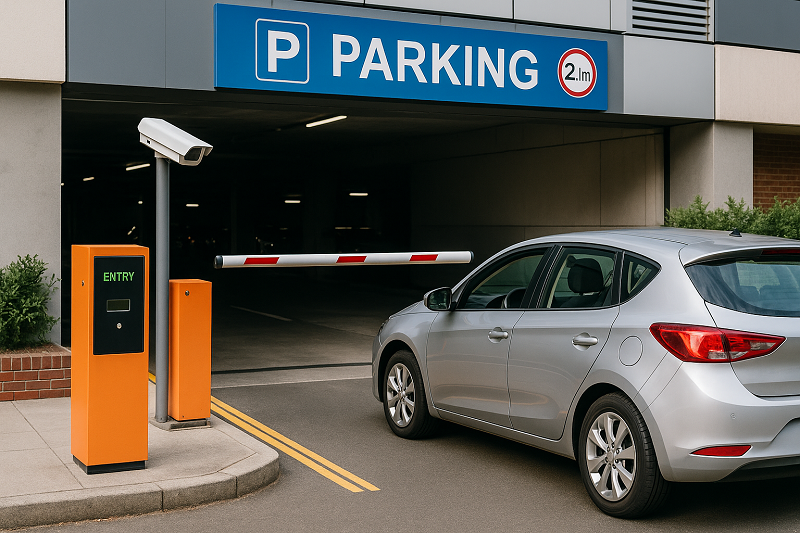
Smart Parking

Many property owners still believe congestion means they need more parking spaces.

Unfortunately, that is rarely possible.

CBD office towers, hospitals and mixed-use developments usually cannot expand their parking facilities.

Instead, the opportunity lies in improving how existing spaces are managed.

That is where smart parking technology changes the conversation.

Rather than focusing only on capacity, smart parking improves efficiency.

Vehicles enter faster.

Visitors access the building more easily.

Occupancy data becomes available in real time.

Property managers gain valuable operational insights instead of relying on estimates.

Smart parking also helps identify underused areas, monitor traffic flow and optimise space allocation throughout the day.

As a result, the same parking facility can often perform significantly better without adding a single extra space.

Sometimes the best improvement is not building more parking.

It is removing unnecessary friction.

Every Minute Spent Waiting Has a Cost

Traffic queues are not simply frustrating.

They also reduce productivity.

Consider a busy office building where fifty vehicles are delayed by only two minutes every morning because of outdated access systems.

Initially, that delay appears insignificant.

Across an entire year, however, it represents hundreds of hours of lost productivity.

The same issue affects contractors waiting at entry points.

Delivery drivers lose valuable time.

Visitors arrive late for meetings.

Reception staff are interrupted repeatedly to assist people entering the parking facility.

These hidden costs rarely appear in financial reports.

Nevertheless, they affect business performance every day.

Modern smart parking solutions reduce these delays by automating access and improving vehicle flow.

As a result, employees spend less time waiting and more time focusing on productive work.

Why ANPR Is Becoming the New Standard

A few years ago, Automatic Number Plate Recognition (ANPR) was mostly associated with airports and major shopping centres.

Today, it has become a standard feature in commercial buildings, residential developments and mixed-use precincts.

The reason is simple.

People no longer want another access card.

They do not want another PIN.

They do not want another ticket.

Their vehicle already provides a secure identifier.

ANPR systems automatically recognise number plates as vehicles approach an entry point.

For authorised users, access happens almost instantly.

There are no windows to wind down.

No buttons to press.

No cards to replace.

For property managers, the benefits extend far beyond convenience.

Every vehicle movement is recorded automatically.

Visitor access becomes easier to manage.

Lost cards almost disappear.

Administration is significantly reduced because the system automates many routine tasks.

Combined with smart parking software, ANPR also delivers valuable reporting and analytics. Building managers can monitor occupancy trends, identify peak traffic periods and make informed operational decisions based on real data instead of assumptions.

Smart Parking Is Becoming a Competitive Advantage

Commercial property is more competitive than ever.

Businesses expect workplaces to deliver convenience, efficiency and a positive daily experience.

Parking is no longer separate from that expectation.

Instead, it has become part of the overall customer journey.

A modern smart parking solution improves security, reduces congestion and simplifies visitor management. It also creates a better first impression for tenants, clients and contractors.

Importantly, smart parking helps future-proof commercial buildings. As vehicle technology, workplace expectations and digital services continue to evolve, parking infrastructure must evolve alongside them.

Property owners who invest in smart parking today are not simply solving current access problems. They are preparing their assets for future tenant expectations while improving operational efficiency and increasing the overall value of the property.

The best parking systems are rarely noticed because they simply work.

That is exactly what makes smart parking such a valuable investment.

elvie nyhan

I am Evie Nyhan, I am a a freelance writer & Passionate blogger. I adore to love to write the blog on different topic like health, lifestyle, Home decor, Business, law, Etc.

Related Posts

Окна в Москве после установки: пять фраз, которые лучше не произносить через месяц

Представим, что ремонт закончен. Новые окна в москве уже установлены, откосы готовы, мебель вернулась на свои места, строительная пыль убрана. Технически всё работает, но через несколько недель хозяева начинают замечать…

The modern corporate landscape is moving faster than ever. Between the rapid adoption of automation, shifting workplace values across generations, and the constant demand for operational efficiency, human resource leaders face a critical challenge: How do you build a workforce that doesn’t just keep up, but actively drives market growth? Many organizations pour significant portions of their annual budget into standard, off-the-shelf workshops. Yet, a few weeks after the session, employees often slip right back into old habits. The truth is that generic training fails because it treats unique business ecosystems with a one-size-fits-all brush. To see a genuine return on your investment, your upskilling strategy needs to be as dynamic and tailored as your business goals. Here is a look at why traditional training models are broken, and how modern organizations are restructuring their learning and development (L&D) strategies for lasting success. The Pitfall of the “One-Size-Fits-All” Workshop Every organization features its own distinct internal culture, operational pain points, and cross-functional friction. When you deploy a rigid, pre-packaged training program, it fails to address the specific day-to-day challenges your employees experience on the ground. True workforce capability development requires a partner capable of building a custom architecture. Working with a dedicated provider to engineer customised corporate training solutions ensures that every module is directly aligned with your operational priorities, industry vertical, and specific skill gaps. Bridging the Leadership Gap for First-Time Managers One of the most frequent organizational missteps is promoting an exceptional technical performer or individual contributor to a managerial role without providing a proper transition framework. Managing people requires an entirely different skill set than managing tasks. Without targeted development, new leaders often struggle with delegation, team motivation, and constructive feedback loops. Implementing a structured first-time managers training program bridges this gap early, equipping emerging leaders with the behavioral tools they need to reduce team turnover and maintain high performance. For organizations aiming to cultivate long-term strategic vision at executive levels, a comprehensive leadership development program in India ensures your leadership pipeline remains robust and future-ready. Beyond Technical Know-How: The Power of Behavioral and Soft Skills Technical expertise can get your foot in the door, but behavioral alignment and communication keep the business moving forward. From handling high-stakes client negotiations to managing workplace conflict, soft skills are the silent engine of productivity. A modern L&D strategy must treat these competencies as measurable, essential skills. Investing in professional soft skills training services and targeted corporate behavioral skills training directly impacts how your teams collaborate across departments, leading to fewer project bottlenecks and smoother execution. Activating Engagement Through Experiential Learning Sitting in a conference room staring at slide decks rarely inspires behavioral change. For teams to truly absorb organizational values and learn how to collaborate under pressure, they need to experience it. This is why forward-thinking organizations are moving toward experiential models. Utilizing structured corporate team building programs or getting teams out of the office for corporate outbound & OBT training program services places employees in dynamic, hands-on scenarios. These environments break down workplace silos, build trust, and teach real-time problem-solving far more effectively than traditional lectures. Scaling Consistency Across PAN-India Operations For enterprises with regional offices, manufacturing plants, or distributed teams across the country, maintaining a uniform standard of training is incredibly difficult. Local nuances, varying trainer quality, and logistical hurdles often lead to an fragmented learning experience. To counter this, scaling organizations require a partner with deep infrastructural reach. Partnering with an organization capable of executing PAN India training projects ensures that whether your employees are based in Delhi-NCR, Mumbai, or remote locations, they receive the exact same high standard of content delivery and facilitator expertise. The Bottom Line Training shouldn’t be a check-the-box exercise to fill an HR calendar. It is a strategic business driver. When you shift away from generic presentations and focus on customized, behavior-driven learning paths, you don’t just train your employees—you elevate your entire organizational capability. If you are looking to audit your current workforce capabilities and design a high-impact learning intervention, explore the tailored programs offered by Talent Sapphire, a premier corporate training company in India dedicated to transforming organizational performance from the ground up.

The modern corporate landscape is moving faster than ever. Between the rapid adoption of automation, shifting workplace values across generations, and the constant demand for operational efficiency, human resource leaders…

Leave a Reply

Your email address will not be published. Required fields are marked *

You Missed

California Cannabis Delivery: Convenience, Selection, and What to Know

Окна в Москве после установки: пять фраз, которые лучше не произносить через месяц

Окна в Москве после установки: пять фраз, которые лучше не произносить через месяц

The modern corporate landscape is moving faster than ever. Between the rapid adoption of automation, shifting workplace values across generations, and the constant demand for operational efficiency, human resource leaders face a critical challenge: How do you build a workforce that doesn’t just keep up, but actively drives market growth? Many organizations pour significant portions of their annual budget into standard, off-the-shelf workshops. Yet, a few weeks after the session, employees often slip right back into old habits. The truth is that generic training fails because it treats unique business ecosystems with a one-size-fits-all brush. To see a genuine return on your investment, your upskilling strategy needs to be as dynamic and tailored as your business goals. Here is a look at why traditional training models are broken, and how modern organizations are restructuring their learning and development (L&D) strategies for lasting success. The Pitfall of the “One-Size-Fits-All” Workshop Every organization features its own distinct internal culture, operational pain points, and cross-functional friction. When you deploy a rigid, pre-packaged training program, it fails to address the specific day-to-day challenges your employees experience on the ground. True workforce capability development requires a partner capable of building a custom architecture. Working with a dedicated provider to engineer customised corporate training solutions ensures that every module is directly aligned with your operational priorities, industry vertical, and specific skill gaps. Bridging the Leadership Gap for First-Time Managers One of the most frequent organizational missteps is promoting an exceptional technical performer or individual contributor to a managerial role without providing a proper transition framework. Managing people requires an entirely different skill set than managing tasks. Without targeted development, new leaders often struggle with delegation, team motivation, and constructive feedback loops. Implementing a structured first-time managers training program bridges this gap early, equipping emerging leaders with the behavioral tools they need to reduce team turnover and maintain high performance. For organizations aiming to cultivate long-term strategic vision at executive levels, a comprehensive leadership development program in India ensures your leadership pipeline remains robust and future-ready. Beyond Technical Know-How: The Power of Behavioral and Soft Skills Technical expertise can get your foot in the door, but behavioral alignment and communication keep the business moving forward. From handling high-stakes client negotiations to managing workplace conflict, soft skills are the silent engine of productivity. A modern L&D strategy must treat these competencies as measurable, essential skills. Investing in professional soft skills training services and targeted corporate behavioral skills training directly impacts how your teams collaborate across departments, leading to fewer project bottlenecks and smoother execution. Activating Engagement Through Experiential Learning Sitting in a conference room staring at slide decks rarely inspires behavioral change. For teams to truly absorb organizational values and learn how to collaborate under pressure, they need to experience it. This is why forward-thinking organizations are moving toward experiential models. Utilizing structured corporate team building programs or getting teams out of the office for corporate outbound & OBT training program services places employees in dynamic, hands-on scenarios. These environments break down workplace silos, build trust, and teach real-time problem-solving far more effectively than traditional lectures. Scaling Consistency Across PAN-India Operations For enterprises with regional offices, manufacturing plants, or distributed teams across the country, maintaining a uniform standard of training is incredibly difficult. Local nuances, varying trainer quality, and logistical hurdles often lead to an fragmented learning experience. To counter this, scaling organizations require a partner with deep infrastructural reach. Partnering with an organization capable of executing PAN India training projects ensures that whether your employees are based in Delhi-NCR, Mumbai, or remote locations, they receive the exact same high standard of content delivery and facilitator expertise. The Bottom Line Training shouldn’t be a check-the-box exercise to fill an HR calendar. It is a strategic business driver. When you shift away from generic presentations and focus on customized, behavior-driven learning paths, you don’t just train your employees—you elevate your entire organizational capability. If you are looking to audit your current workforce capabilities and design a high-impact learning intervention, explore the tailored programs offered by Talent Sapphire, a premier corporate training company in India dedicated to transforming organizational performance from the ground up.

The modern corporate landscape is moving faster than ever. Between the rapid adoption of automation, shifting workplace values across generations, and the constant demand for operational efficiency, human resource leaders face a critical challenge: How do you build a workforce that doesn’t just keep up, but actively drives market growth?  Many organizations pour significant portions of their annual budget into standard, off-the-shelf workshops. Yet, a few weeks after the session, employees often slip right back into old habits.  The truth is that generic training fails because it treats unique business ecosystems with a one-size-fits-all brush. To see a genuine return on your investment, your upskilling strategy needs to be as dynamic and tailored as your business goals.  Here is a look at why traditional training models are broken, and how modern organizations are restructuring their learning and development (L&D) strategies for lasting success.  The Pitfall of the “One-Size-Fits-All” Workshop Every organization features its own distinct internal culture, operational pain points, and cross-functional friction. When you deploy a rigid, pre-packaged training program, it fails to address the specific day-to-day challenges your employees experience on the ground. True workforce capability development requires a partner capable of building a custom architecture. Working with a dedicated provider to engineer customised corporate training solutions ensures that every module is directly aligned with your operational priorities, industry vertical, and specific skill gaps.  Bridging the Leadership Gap for First-Time Managers One of the most frequent organizational missteps is promoting an exceptional technical performer or individual contributor to a managerial role without providing a proper transition framework. Managing people requires an entirely different skill set than managing tasks. Without targeted development, new leaders often struggle with delegation, team motivation, and constructive feedback loops. Implementing a structured first-time managers training program bridges this gap early, equipping emerging leaders with the behavioral tools they need to reduce team turnover and maintain high performance. For organizations aiming to cultivate long-term strategic vision at executive levels, a comprehensive leadership development program in India ensures your leadership pipeline remains robust and future-ready.  Beyond Technical Know-How: The Power of Behavioral and Soft Skills Technical expertise can get your foot in the door, but behavioral alignment and communication keep the business moving forward. From handling high-stakes client negotiations to managing workplace conflict, soft skills are the silent engine of productivity. A modern L&D strategy must treat these competencies as measurable, essential skills. Investing in professional soft skills training services and targeted corporate behavioral skills training directly impacts how your teams collaborate across departments, leading to fewer project bottlenecks and smoother execution.  Activating Engagement Through Experiential Learning Sitting in a conference room staring at slide decks rarely inspires behavioral change. For teams to truly absorb organizational values and learn how to collaborate under pressure, they need to experience it. This is why forward-thinking organizations are moving toward experiential models. Utilizing structured corporate team building programs or getting teams out of the office for corporate outbound & OBT training program services places employees in dynamic, hands-on scenarios. These environments break down workplace silos, build trust, and teach real-time problem-solving far more effectively than traditional lectures.  Scaling Consistency Across PAN-India Operations For enterprises with regional offices, manufacturing plants, or distributed teams across the country, maintaining a uniform standard of training is incredibly difficult. Local nuances, varying trainer quality, and logistical hurdles often lead to an fragmented learning experience. To counter this, scaling organizations require a partner with deep infrastructural reach. Partnering with an organization capable of executing PAN India training projects ensures that whether your employees are based in Delhi-NCR, Mumbai, or remote locations, they receive the exact same high standard of content delivery and facilitator expertise.  The Bottom Line Training shouldn’t be a check-the-box exercise to fill an HR calendar. It is a strategic business driver. When you shift away from generic presentations and focus on customized, behavior-driven learning paths, you don’t just train your employees—you elevate your entire organizational capability.  If you are looking to audit your current workforce capabilities and design a high-impact learning intervention, explore the tailored programs offered by Talent Sapphire, a premier corporate training company in India dedicated to transforming organizational performance from the ground up.

What Great PTO Services Look Like for Solar Installers

What Great PTO Services Look Like for Solar Installers

BB Glow Cream for a Fresh and Luminous Look

BB Cream with SPF for Natural Coverage & Glowing Skin