Boxo Packaging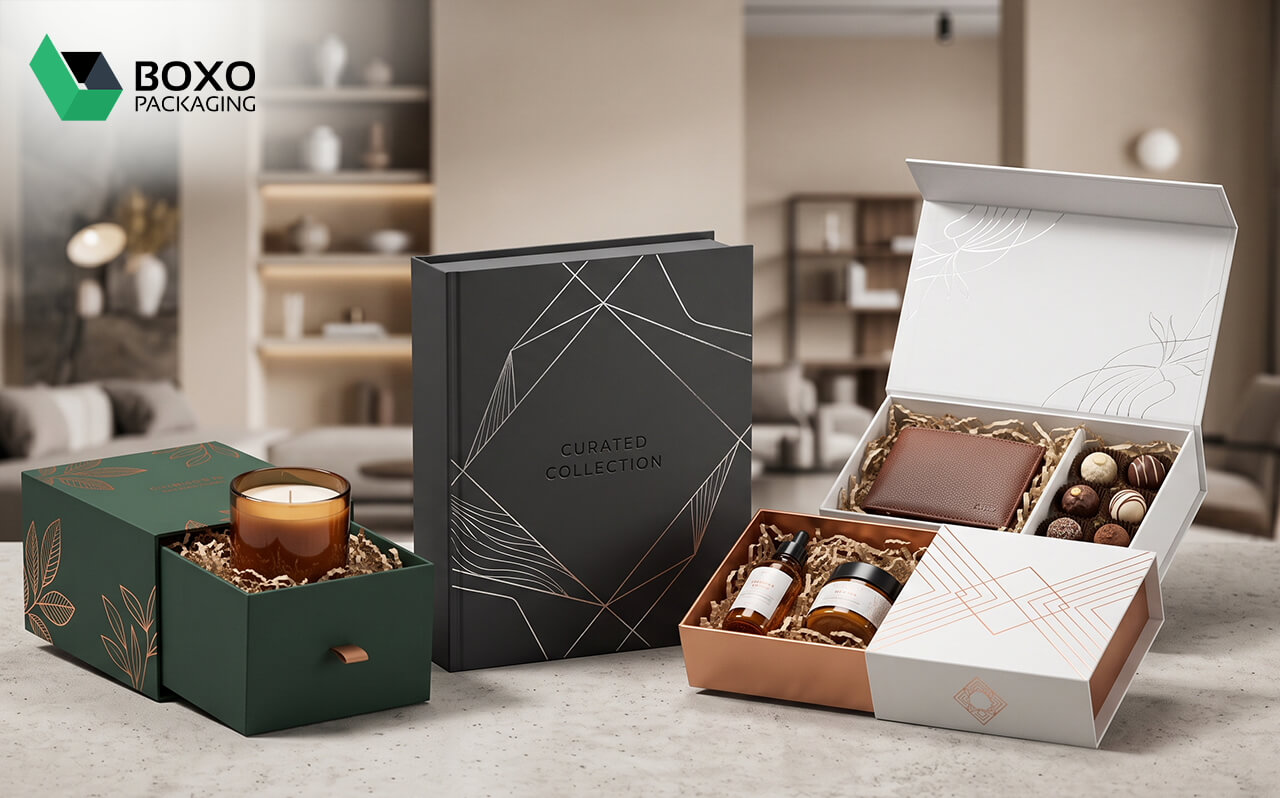
Not every packaging decision needs to chase the newest material trend or the most elaborate finish. Sometimes the smartest choice is also the most familiar one, and cardboard gift boxes are a good example of that. They’ve been a packaging staple for decades, not because businesses haven’t found alternatives, but because cardboard consistently delivers on the two things that matter most for a huge range of products: reliable protection and reasonable cost. For brands trying to balance presentation with a sensible budget, cardboard gift boxes remain one of the most dependable options available, and it’s worth understanding exactly why that reliability holds up so well.
What Makes Cardboard Such a Practical Material
Cardboard, particularly corrugated cardboard, is built from layered paper fibers that create real structural strength relative to its weight. That layered construction is what gives cardboard its ability to absorb impact, resist crushing, and hold its shape through handling and shipping, all while remaining lightweight enough to keep shipping costs manageable. Unlike more delicate materials that need extra reinforcement to survive transit, cardboard is inherently suited to the rough realities of shipping and handling without requiring significant additional engineering.
It’s also one of the most widely produced and recycled packaging materials in the world, which keeps supply stable and pricing consistent compared to more specialized or harder-to-source alternatives.
Why Cardboard Gift Boxes Specifically Make Sense
They Protect Without Overcomplicating the Packaging Process
Gift items often need more protection than everyday shipped products, since they’re frequently handled, transported, and sometimes shipped a second time by the recipient themselves. Cardboard’s natural rigidity and cushioning properties handle this reliably without requiring specialized foam inserts or elaborate internal structures for most products, keeping the overall packaging process simpler and more predictable.
The Cost Structure Supports Both Small and Large Orders
Cardboard remains relatively affordable across a wide range of order volumes, which matters for gift-focused brands that may not have entirely predictable demand throughout the year. Unlike some premium materials that only become cost-effective at very high volumes, cardboard offers a more forgiving cost curve, useful for brands managing seasonal spikes around holidays or gifting occasions without needing to drastically overhaul their packaging budget each time demand shifts.
It Takes Custom Printing and Finishing Well
Despite its reputation as a purely functional material, cardboard supports a wide range of finishing techniques, full color printing, embossing, foil accents, and various coatings, allowing brands to create a genuinely distinctive, branded gift box without switching to a more expensive base material. The idea that cardboard automatically looks plain or basic isn’t accurate; the finished appearance depends far more on design choices layered on top than on the underlying material itself.
It’s Widely Recyclable, Supporting Sustainability Goals
Cardboard is one of the most straightforward materials to recycle, and much of it is already produced from recycled content. For brands paying attention to sustainability messaging, particularly relevant for gift-focused purchases where customers are increasingly conscious of packaging waste, cardboard offers an easy, credible way to support that positioning without needing to source specialty eco-materials at a premium cost.
It Handles a Wide Range of Product Types
From delicate items needing cushioned inserts to bulkier gift sets requiring structural rigidity, cardboard adapts well across an unusually broad range of product categories. This versatility means a single supplier relationship and material choice can often serve most of a brand’s packaging needs, rather than requiring different specialized materials for different product lines.
Common Misconceptions About Cardboard Packaging
“Cardboard Automatically Looks Cheap”
This assumption holds up only when a cardboard box is left plain and undesigned. With thoughtful printing, a well-chosen finish, and attention to construction quality, cardboard boxes can look every bit as considered and premium as boxes made from more expensive base materials. The perception of quality comes largely from design execution, not the raw material cost alone.
“Cardboard Isn’t Strong Enough for Fragile Gifts”
Corrugated cardboard, in particular, offers real structural strength and, when paired with appropriate interior inserts or cushioning, protects fragile items reliably. The misconception often comes from comparing cardboard to itself in a low-quality, thin, single-layer form rather than the sturdier corrugated options typically used for gift and shipping purposes.
“Cardboard Can’t Be Sustainable and Premium at the Same Time”
Recycled or FSC-certified cardboard can absolutely support a premium presentation when combined with quality printing and finishing techniques. Sustainability and polished presentation aren’t mutually exclusive; they’re a matter of thoughtful material sourcing and design, not an inherent limitation of the material itself.
Getting the Most Out of Cardboard Gift Boxes
Choose the Right Grade and Flute Type
Cardboard comes in different strength grades and flute types, the wavy internal layer that provides structural rigidity. Heavier, denser flutes offer more protection for fragile or heavier items, while lighter grades work well for simpler, lower-weight gifts. Matching the grade to the actual product being packaged avoids both overspending on unnecessary strength and underprotecting items that need it.
Invest in Design, Not Just Material Upgrades
Since cardboard’s perceived value depends heavily on design execution, allocating budget toward thoughtful printing, a distinctive color choice, or a well-placed finishing technique often delivers more visible improvement than switching to a more expensive base material entirely.
Add Interior Elements for Fragile or Higher-Value Gifts
Simple additions like tissue paper, molded pulp inserts, or fitted dividers extend cardboard’s protective capability significantly for delicate items, letting brands use a cost-effective base material while still ensuring adequate protection for items that need it.
Consider Closure Style Based on How the Box Will Be Used
Options range from simple tuck-end closures to more elevated magnetic or ribbon-tie closures. The right choice depends on the intended presentation level and whether the box needs to be reopened and reused, which matters more for gift boxes than for standard shipping packaging.
Order Samples Before Committing to a Full Run
Cardboard quality can vary meaningfully between suppliers and grades, and a physical sample confirms both the structural performance and how well a chosen print design translates onto the actual material before a larger order is placed.
The Bottom Line
Cardboard gift boxes remain a smart choice precisely because they don’t ask a brand to trade off between reliability and cost. The material protects effectively, supports genuine custom branding, scales reasonably across different order volumes, and holds up to sustainability scrutiny, all without the premium price tag that comes with more specialized packaging materials. For brands looking for a dependable foundation to build their gift packaging around, cardboard continues to earn its long-standing reputation, not as a fallback choice, but as a genuinely practical one.
FAQs
1. Is cardboard strong enough to protect fragile gift items? Yes, particularly corrugated cardboard, which offers real structural strength through its layered construction. Pairing the right cardboard grade with appropriate interior cushioning or inserts makes it suitable for even fairly delicate items.
2. Can cardboard gift boxes be customized with branding and design? Absolutely. Cardboard supports a wide range of printing and finishing techniques, including full-color printing, embossing, and foil stamping, allowing for genuinely distinctive, branded packaging without switching to a more expensive material.
3. Is cardboard packaging environmentally friendly? Generally, yes. Cardboard is widely recyclable and often made from recycled content already. Choosing FSC-certified or recycled cardboard specifically can further strengthen a brand’s sustainability positioning.
4. How much more expensive is custom printed cardboard compared to plain cardboard? Custom printing adds cost, primarily through design setup and ink coverage, but cardboard remains relatively affordable even with customization compared to premium materials like rigid board or fabric-wrapped packaging. Simple one- or two-color designs help keep costs manageable.
5. What’s the difference between cardboard and corrugated cardboard? Cardboard is a general term that can refer to various paperboard materials, while corrugated cardboard specifically includes a wavy internal layer, called fluting, sandwiched between flat liners, which provides significantly more structural strength and cushioning than plain paperboard.
6. Are cardboard gift boxes suitable for high-end or premium gift presentations? Yes, when paired with thoughtful design and finishing. While cardboard alone doesn’t automatically signal luxury the way rigid or fabric-wrapped boxes might, well-executed printing, a considered color palette, and quality construction can elevate cardboard packaging to feel genuinely premium.

 ASGeye Hospital