Use Oem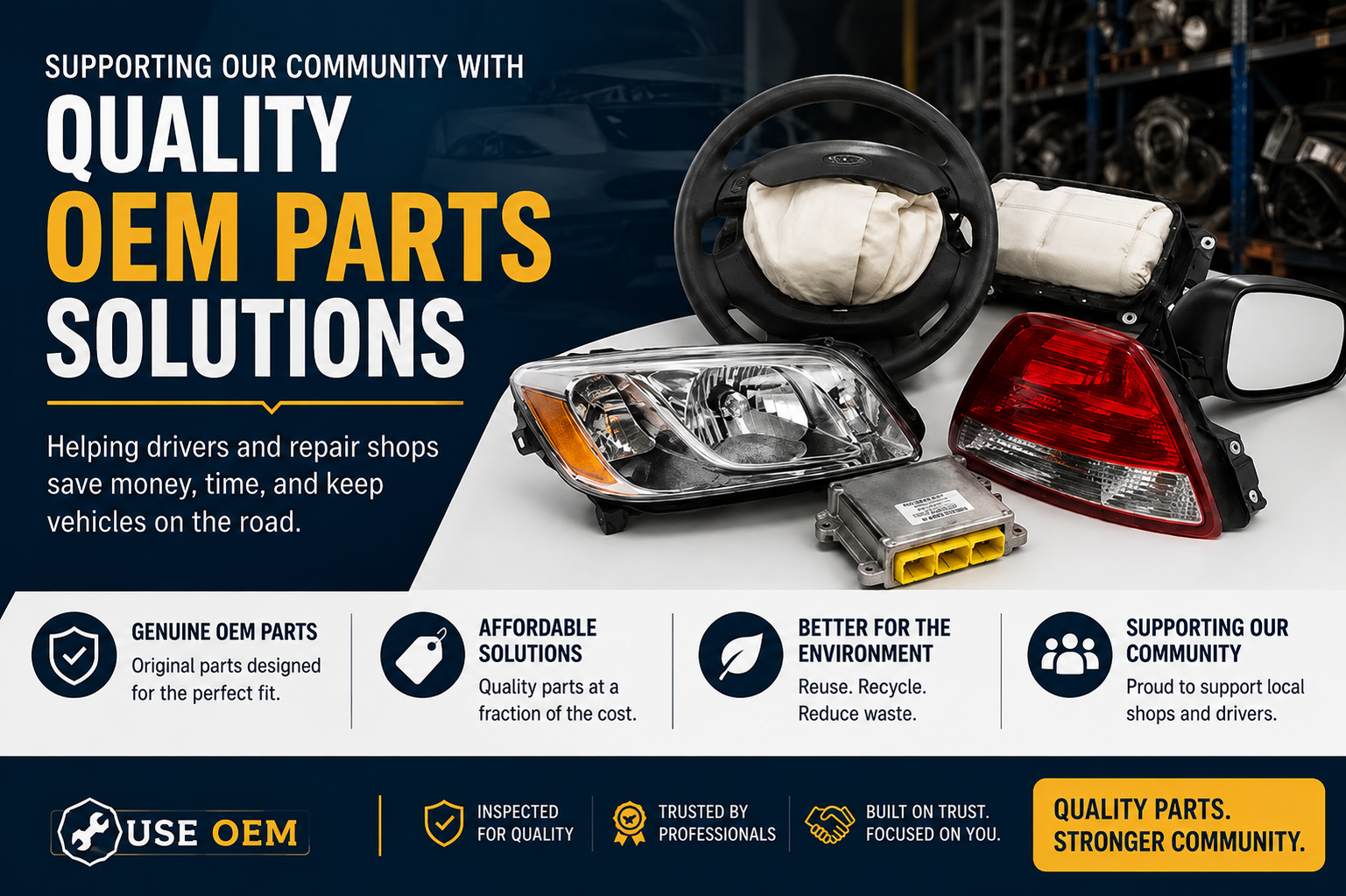
Replacing an airbag after a collision requires careful attention to vehicle compatibility. The right component depends on more than the vehicle’s make and model. Production year, trim level, airbag position, OEM identification, and SRS configuration can all influence which replacement module is appropriate.
Use OEM gives vehicle owners and automotive professionals a practical way to search for OEM used airbag modules according to specific vehicle applications. Instead of treating every airbag as a universal component, buyers can narrow their search based on the vehicle information available to them.
Whether the required component is located in the steering wheel, dashboard, roof area, seat, or lower instrument panel, understanding how to identify the correct application can make the replacement process more straightforward.
Table of Contents
- Why Airbag Identification Is Important
- Use OEM for Application-Based Searches
- Start With Your Vehicle Information
- Match the Airbag Position
- Understand OEM Part Numbers
- Compare Product Details Before Ordering
- Why SRS Compatibility Matters
- Safe Installation and Recall Checks
- Frequently Asked Questions
- Final Thoughts
Why Airbag Identification Is Important
An airbag is a component of the vehicle’s Supplemental Restraint System, or SRS. Unlike ordinary interior parts, these modules are connected to a safety system that may include sensors, wiring, control modules, seat belts, and other restraint components.
That means appearance alone is not enough to establish compatibility.
Two vehicles may have similar steering wheels while using different airbag modules. Likewise, the same model can have different components across separate generations or trim configurations.
This is why buyers searching for an OEM airbag replacement should begin with precise vehicle information. Identifying the original application first can help prevent confusion when several similar listings appear in search results.
The National Highway Traffic Safety Administration provides consumer information about airbag systems and explains the role airbags play as supplemental protection alongside seat belts. NHTSA Air Bag Safety Guide
Use OEM for Application-Based Searches
Use OEM focuses on vehicle-specific OEM used parts, including airbag modules for different makes, models, years, and applications. This approach gives shoppers a more structured starting point when they know the vehicle that needs the replacement.
Rather than searching for a generic airbag, buyers can first identify their vehicle and then determine which type of module was originally installed.
For example, a driver may need a steering wheel module after deployment, while another vehicle may require a passenger dashboard component or a curtain module. These are separate applications and should be researched individually.
The Use OEM airbag collection provides a central starting point for browsing different airbag applications without relying on one broad product description.
Start With Your Vehicle Information
The first step in finding an appropriate replacement is collecting the basic details of the vehicle.
Make and Model
Record the manufacturer’s name and exact model. A general description such as “Toyota SUV” does not provide enough information to narrow down a replacement.
The complete model name gives you a much better starting point.
Model Year
Always check the model year before comparing replacement modules. Vehicle manufacturers can update restraint systems when introducing a new generation or changing a vehicle’s interior configuration.
A component that fits one year range should not automatically be assumed to fit every other year carrying the same model name.
Trim Level
Trim information can sometimes help distinguish between different vehicle configurations. Features, seating arrangements, steering wheel options, and safety equipment can vary between trims.
When a listing provides trim information, compare it with the vehicle’s documentation.
VIN
The Vehicle Identification Number can provide a more precise reference to the individual vehicle. If there is uncertainty about the correct application, having the VIN available can help with fitment research.
The VIN should be used as a verification tool rather than relying solely on a generic model description.
Match the Airbag Position
One of the easiest ways to narrow a search is to identify where the original module was installed.
Steering Wheel Module
A driver steering wheel airbag is positioned directly in front of the driver. Replacement searches should consider the vehicle generation, steering wheel configuration, and OEM identification associated with the original component.
Passenger Dashboard Module
The passenger module is generally positioned within the dashboard. Dashboard design and SRS configurations can vary, making vehicle-specific research important.
Curtain Module
Curtain airbags are located along the roof or upper side area of the passenger compartment. Their installation location differs significantly from frontal modules.
Side-Mounted Module
Some vehicles have side airbags integrated into the seat or another interior location. The exact placement depends on the vehicle’s SRS configuration.
Knee Module
A knee airbag is generally located below the dashboard and is intended to provide supplemental protection for the lower body area.
Use OEM maintains separate vehicle-based categories, making it possible to research different airbag positions instead of treating all SRS modules as one interchangeable product type.
Understand OEM Part Numbers
The OEM part number can be one of the most useful pieces of information when comparing replacement components.
If the original module has an identification label, record the number carefully. Compare it with the information shown in the replacement listing.
Part numbers can contain letters, numbers, and manufacturer-specific identifiers. A small difference may represent a different application, revision, or configuration.
However, a part number should not be considered in isolation. It is better to compare the number with the vehicle make, model year, airbag position, and other available fitment details.
This is especially important when searching online because photographs of similar modules may look nearly identical even though their applications differ.
Compare Product Details Before Ordering
After narrowing the search to the correct vehicle and airbag type, review the individual listing carefully.
Look for information such as:
- Vehicle make
- Vehicle model
- Applicable model years
- Airbag location
- OEM part number
- Stated condition
- Connector information
- Mounting configuration
- Available fitment information
Do not rely on a product photograph as the only source of compatibility information.
A photograph can help identify the general shape of a module, but it may not show connector differences or other details that matter during installation.
When buying a used airbag module, also read the condition description carefully. Buyers should understand exactly what type of component is being offered before completing an order.
Why SRS Compatibility Matters
The SRS is a network rather than a single component. An airbag module can interact with sensors and other restraint-system components through the vehicle’s electrical system.
After deployment, replacing the visible airbag is therefore only one part of the overall repair process. The vehicle may also require inspection of related SRS components and diagnostic procedures.
This is why selecting a component based only on price or appearance is not a reliable approach.
The objective should be to identify the correct OEM application and then have the vehicle evaluated according to appropriate repair procedures.
Search by Vehicle Instead of Using Generic Terms
Generic searches often produce broad results. A more targeted approach is to combine several relevant terms.
For example:
Vehicle make + model + year + airbag position
A search for “driver airbag” is broad. A search that includes the vehicle and year is considerably more specific.
You can also add the OEM part number if it is available.
This approach is useful for shoppers looking for OEM airbag for sale, airbag replacement parts, or a used SRS airbag because it reduces unrelated results and focuses attention on the actual vehicle application.
For example, someone researching Toyota applications can move from a broad search to a specific Toyota airbag collection and then compare available applications based on the vehicle information.
Used OEM Modules: What Buyers Should Consider
A used OEM component comes from an existing vehicle rather than being a newly produced replacement. For buyers considering this type of component, the most important questions concern application and condition.
The module should be identified clearly enough for the buyer to understand what vehicle it came from and which position it serves.
It is also useful to compare the original component with the replacement listing wherever possible. Part numbers, labels, connectors, and physical configuration can provide additional references during the selection process.
For older vehicles, application-specific used OEM components can also provide an option when locating the exact original-equipment application is otherwise difficult.
Safe Installation and Recall Checks
Airbag replacement should be treated as a safety-critical repair. Installation, SRS diagnostics, and related procedures should be handled by an appropriately qualified automotive professional.
NHTSA advises consumers to address airbag recalls promptly and provides resources for checking vehicle safety information. Vehicle owners can use official recall resources to determine whether their vehicle has an outstanding safety recall.
It is also important to understand that a replacement module does not automatically resolve every SRS-related issue. If the vehicle experienced a collision, other components may require inspection according to the vehicle manufacturer’s repair procedures.
Frequently Asked Questions
How can I identify the correct replacement airbag?
Start with the vehicle’s make, model, model year, trim, and the position of the original airbag. Then compare the OEM part number and available fitment information.
Does the same model always use the same airbag?
No. Different generations, model years, trims, and SRS configurations can use different modules. Compatibility should always be confirmed before purchase.
Why is the OEM part number useful?
The OEM part number gives you a specific identification reference for comparing the original component with a potential replacement.
Can I identify an airbag from a photograph?
A photograph can help with basic identification, but it should not be the only method used to determine compatibility. Part numbers and vehicle-specific information provide stronger references.
What information should I have before contacting a seller?
Have the vehicle make, model, year, trim if known, VIN, airbag position, and OEM part number available. Providing more accurate information can make fitment research easier.
Does an airbag replacement require professional installation?
Because airbags are safety-critical SRS components, installation and system diagnostics should be performed by a qualified professional using the appropriate vehicle-specific procedures.
Final Thoughts
Choosing an airbag replacement requires a vehicle-specific approach. The correct module depends on details such as the vehicle application, model year, airbag position, OEM identification, and SRS configuration.
Starting with accurate information makes the search much easier. Instead of choosing a component based solely on appearance, buyers can compare vehicle details, part numbers, condition information, and application data before making a decision.
UseOEM provides a focused catalog of OEM used airbag modules and other vehicle-specific components, giving shoppers a practical place to begin their search. Taking the time to verify compatibility before ordering can help create a more informed replacement process and reduce the possibility of selecting the wrong module.

 pakagristore