Fixit Dubai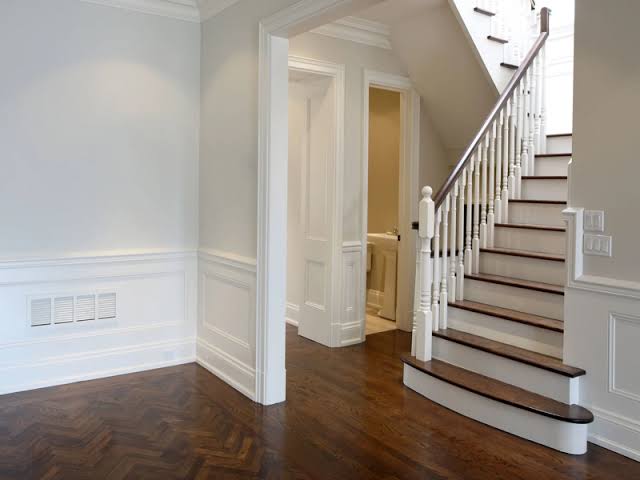
There is a moment in any renovation when a room looks almost done — the flooring is in, the walls are painted, the furniture is placed. But something still feels unfinished. That gap between the wall and the floor, the rough edge where two surfaces meet, the cable running along the baseboard — these small details undermine an otherwise well-executed interior. MDF skirting in Dubai solves all of this in a single, affordable installation that elevates the finished look of any room significantly.
Why MDF Has Become the Standard Choice for Skirting
MDF skirting boards have overtaken solid wood as the dominant skirting choice in Dubai’s residential and commercial market — and the reasons are entirely practical.
Medium Density Fiberboard is manufactured from compressed wood fibers bonded under high pressure, producing a material that is denser and more consistent than natural timber. Unlike solid wood, MDF has no knots, no grain variation, and no surface defects — resulting in a perfectly smooth surface that takes paint flawlessly and presents a clean, uniform finish from every angle.
MDF baseboards also resist warping and cracking in Dubai’s climate far more reliably than natural wood. The temperature cycling between Dubai’s outdoor heat and aggressively air-conditioned interiors causes solid timber to expand and contract repeatedly — eventually developing gaps, cracks, and distortions that undermine the clean edge they were installed to create. MDF handles these conditions with considerably more stability.
Cost is the final practical advantage. Quality MDF skirting boards deliver a finish that is visually indistinguishable from more expensive solid wood alternatives, at a price point that makes them accessible for every room in a residential renovation or large-scale commercial fitout.
Choosing the Right Profile for Your Space
The profile of a skirting board — its cross-sectional shape — has a significant impact on how the finished room reads.
Plain MDF skirting suits contemporary and minimalist interiors where clean lines and uninterrupted surfaces define the design language. A flat, square-edged profile running along the base of white or neutral walls creates a precise, modern finish that complements the architectural style of most new Dubai apartments and villas.
Decorative MDF skirting introduces more traditional character — shaped profiles with subtle curves, stepped edges, or ogee details that reference classical architectural moulding. These suit more formal interiors, period-influenced designs, and spaces where a sense of architectural heritage is part of the brief.
White primed MDF skirting comes factory-prepared for painting — saving installation time and ensuring an even, professional paint finish without the additional preparation that unpainted boards require. For projects where speed matters, or where a custom paint color needs to match the wall exactly, primed boards are the practical choice.
Moisture-resistant MDF skirting is the specification for kitchens, bathrooms, laundry areas, and any space where humidity levels are consistently higher than a standard living room. Standard MDF is not designed for prolonged moisture exposure — moisture-resistant MDF uses a modified formulation that resists swelling and delamination in damp environments, maintaining its appearance and structural integrity where standard boards would eventually fail.
Beyond the Baseboard — Other MDF Skirting Applications
MDF wall skirting is the most common application, but the same material and profiles extend to several other uses within an interior. MDF stair skirting runs alongside staircase strings, covering the gap between the stair structure and the adjacent wall for a clean, finished appearance on one of the most visible and heavily used architectural features in any home. MDF corner skirting addresses internal and external corners where standard boards meet — a critical detail that determines whether the overall installation looks precisely fitted or roughly assembled.
Getting the Installation Right
The quality of a skirting installation is determined as much by preparation and fixing technique as by the board itself. Walls in Dubai’s concrete construction require proper plugging and fixing — adhesive alone is rarely sufficient for long-term performance. Corner joints must be accurately mitred or scribed to close neatly without gaps. And the finishing — filling nail holes, sealing joints, and applying the final coat of paint — is where an installation either looks professionally executed or falls slightly short.
For plain, decorative, white primed, moisture-resistant, and custom MDF skirting in Dubai — including MDF floor skirting, MDF wall skirting, MDF stair skirting, and MDF corner skirting — with free quotes and 25% OFF, reach out to Fixit Design Dubai today.

 Rohan rana
 Keanu Wick