Muhammad Mehmood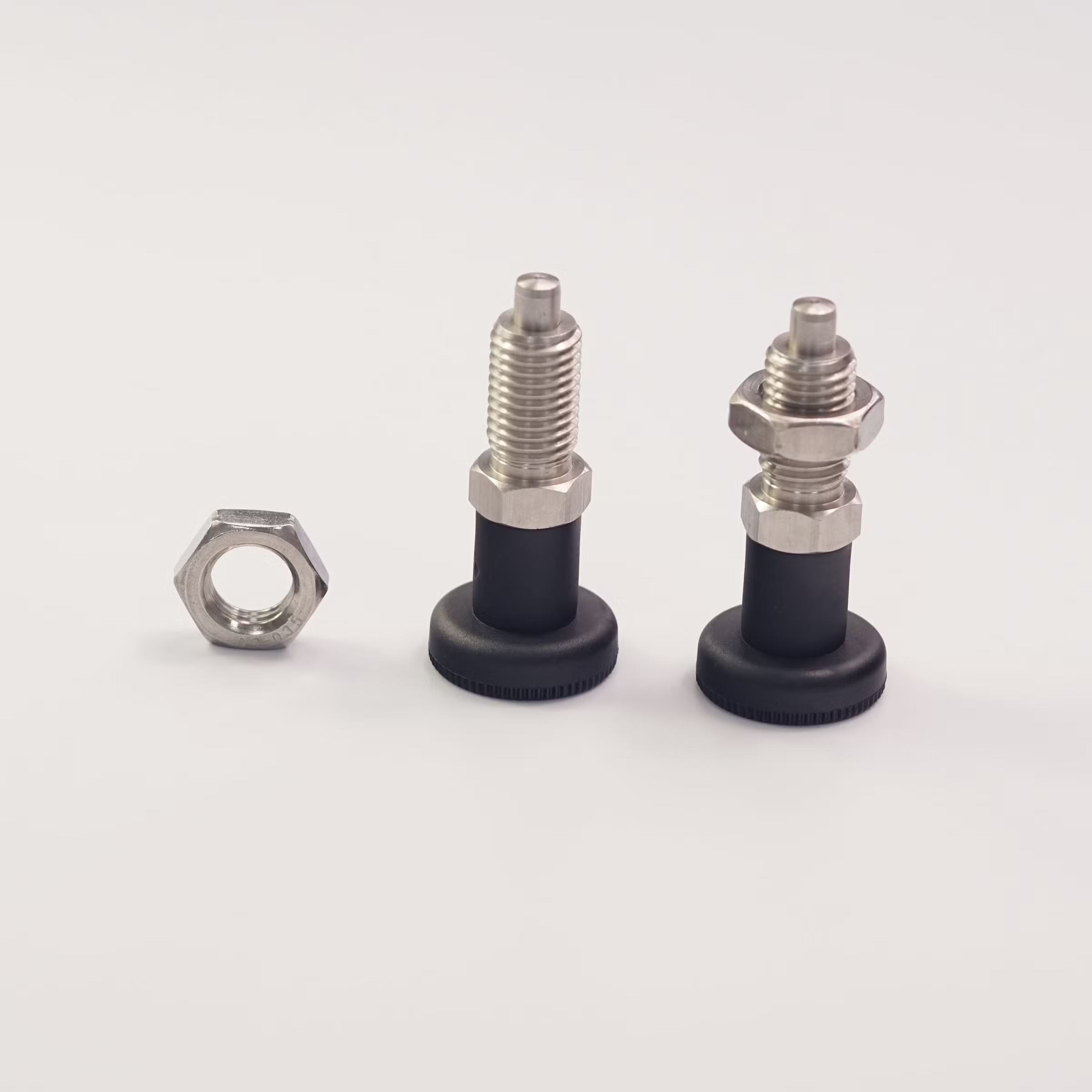
Precision matters in manufacturing, automation, and machine design. Even a slight positioning error can affect product quality, increase wear, or create unnecessary downtime. Components that ensure accurate alignment are often overlooked, yet they play a vital role in maintaining consistency and repeatability across countless industrial applications.
When engineers need reliable positioning and locking mechanisms, indexing plungers are frequently considered as part of the solution because they simplify alignment while improving operational efficiency. Understanding how these components work helps designers select the right option for different applications and avoid costly design mistakes.
Whether you’re designing custom equipment, maintaining production machinery, or improving an existing mechanical system, knowing when and how to use indexing plungers can improve both performance and reliability.
Understanding Indexing Plungers and Their Purpose
Indexing plungers are mechanical positioning components designed to lock, secure, or accurately locate moving parts. They typically consist of a threaded body, spring-loaded pin, and knob or pull ring. When the knob is pulled, the pin retracts, allowing movement or repositioning. Releasing the knob enables the spring to push the pin back into a matching hole, locking the component into place.
This simple mechanism is widely used because it provides repeatable positioning without requiring complicated tools or adjustment procedures.
Common applications include:
- Adjustable machine guards
- Conveyor systems
- Fixture and jig positioning
- Packaging equipment
- Assembly workstations
- Industrial automation
- Medical equipment
- Laboratory instruments
- Material handling systems
Because indexing plungers can be engaged repeatedly throughout a machine’s service life, they offer excellent durability when properly selected and maintained.
How Indexing Plungers Improve Mechanical Performance
Accurate positioning directly impacts manufacturing quality. A properly installed indexing plunger ensures that moving components return to the exact location every time.
Some of the primary advantages include:
- Improved positioning accuracy
- Faster machine setup
- Reduced operator error
- Better repeatability
- Lower maintenance requirements
- Increased workplace safety
- Reliable locking during operation
For example, consider an adjustable welding fixture. Without a positive positioning mechanism, operators may spend several minutes aligning components before every production run. An indexing plunger allows predefined positions to be selected instantly, reducing setup time while maintaining consistent alignment.
This improvement becomes even more valuable in high-volume manufacturing environments where frequent adjustments occur throughout the day.
Step-by-Step Guide to Selecting the Right Indexing Plunger
Choosing the correct indexing plunger requires more than matching thread size. Several design factors influence long-term performance.
Evaluate the Required Load
Determine whether the plunger will primarily position a component or also resist operational forces.
Light-duty applications may only require standard spring-loaded plungers, while heavy industrial equipment often benefits from hardened steel pins designed for higher loads.
Consider Environmental Conditions
Industrial environments vary significantly.
If the equipment operates in areas exposed to moisture, chemicals, or food processing requirements, stainless steel models generally provide better corrosion resistance than standard steel.
Dusty environments may also require sealed designs to reduce contamination inside the mechanism.
Choose the Appropriate Pin Type
Different applications require different pin configurations.
Common options include:
- Hardened steel pins
- Stainless steel pins
- Rounded tips
- Flat-end pins
- Lock-out versions
- Rest-position plungers
The pin shape should match the mating hole and expected loading conditions.
Verify Mounting Space
Space limitations often determine the most suitable design.
Check:
- Available installation depth
- Thread size
- Knob clearance
- Operator accessibility
- Retraction distance
Ignoring these measurements may create installation problems later in the project.
Test Before Full Production
Whenever possible, prototype the assembly before finalizing production.
Testing confirms that:
- The pin engages smoothly.
- Alignment remains accurate.
- Operators can easily use the mechanism.
- No unexpected interference occurs during movement.
Early testing minimizes redesign costs.
Common Mistakes When Using Indexing Plungers
Even experienced designers occasionally encounter problems caused by improper selection or installation.
One common mistake is selecting a plunger based only on thread diameter. The load capacity, pin length, and operating environment are equally important.
Another issue involves poor hole alignment. If the receiving hole is not accurately positioned, the pin may bind or fail to engage completely. This can increase wear and reduce positioning accuracy.
Many maintenance teams also overlook regular inspections. Dirt, metal chips, or lubricant buildup can prevent smooth pin movement over time.
Using incorrect materials is another frequent challenge. Installing carbon steel components in corrosive environments may lead to rust, sticking, and premature failure.
Finally, excessive side loading can shorten component life. Indexing plungers are primarily designed for positioning rather than supporting large lateral forces. Additional structural supports should handle significant mechanical loads.
Expert Recommendations for Reliable Performance
Professionals who regularly design industrial equipment follow several best practices to maximize reliability.
Always design receiving holes with precise tolerances. Consistent hole quality ensures smooth engagement throughout the machine’s life.
Use hardened bushings when plungers engage repeatedly in softer materials such as aluminum. This prevents wear that could eventually reduce positioning accuracy.
Lubricate moving parts according to manufacturer recommendations. Proper lubrication reduces friction while extending service life.
During scheduled maintenance, inspect:
- Pin movement
- Spring tension
- Thread condition
- Corrosion
- Mounting security
Replacing worn components before failure helps prevent unexpected production downtime.
For automated systems, consider indexing plungers with lock-out functionality when equipment requires temporary disengagement during maintenance or changeovers.
Documentation also matters. Clearly labeling indexed positions simplifies operator training and reduces setup errors during production shifts.
Real-World Applications Across Industries
Indexing plungers serve many industries because their design is both versatile and dependable.
In manufacturing, they secure adjustable fixtures that accommodate different product sizes.
Packaging machines use them to reposition guides quickly when changing packaging dimensions.
Medical equipment manufacturers rely on precise positioning to maintain consistent calibration and equipment adjustments.
Laboratories use indexing plungers for adjustable instrument mounts where repeatable positioning improves testing accuracy.
Furniture manufacturers incorporate them into adjustable production fixtures, reducing setup times while maintaining consistent assembly quality.
Even transportation equipment uses these components for adjustable seats, storage systems, and maintenance access panels requiring secure positioning.
Their widespread adoption demonstrates how a relatively simple mechanical component can solve complex positioning challenges efficiently.
Conclusion
Indexing plungers remain one of the most practical solutions for achieving accurate, repeatable positioning in mechanical systems. Their straightforward design, dependable operation, and versatility make them valuable across manufacturing, automation, laboratory equipment, and countless industrial applications. By selecting the appropriate materials, considering operating conditions, and following proper installation and maintenance practices, engineers can improve equipment reliability while reducing downtime and setup time. A thoughtful approach to component selection ensures long-term performance and helps mechanical systems operate with greater precision and consistency.


 Awais Tufail