Lois Miller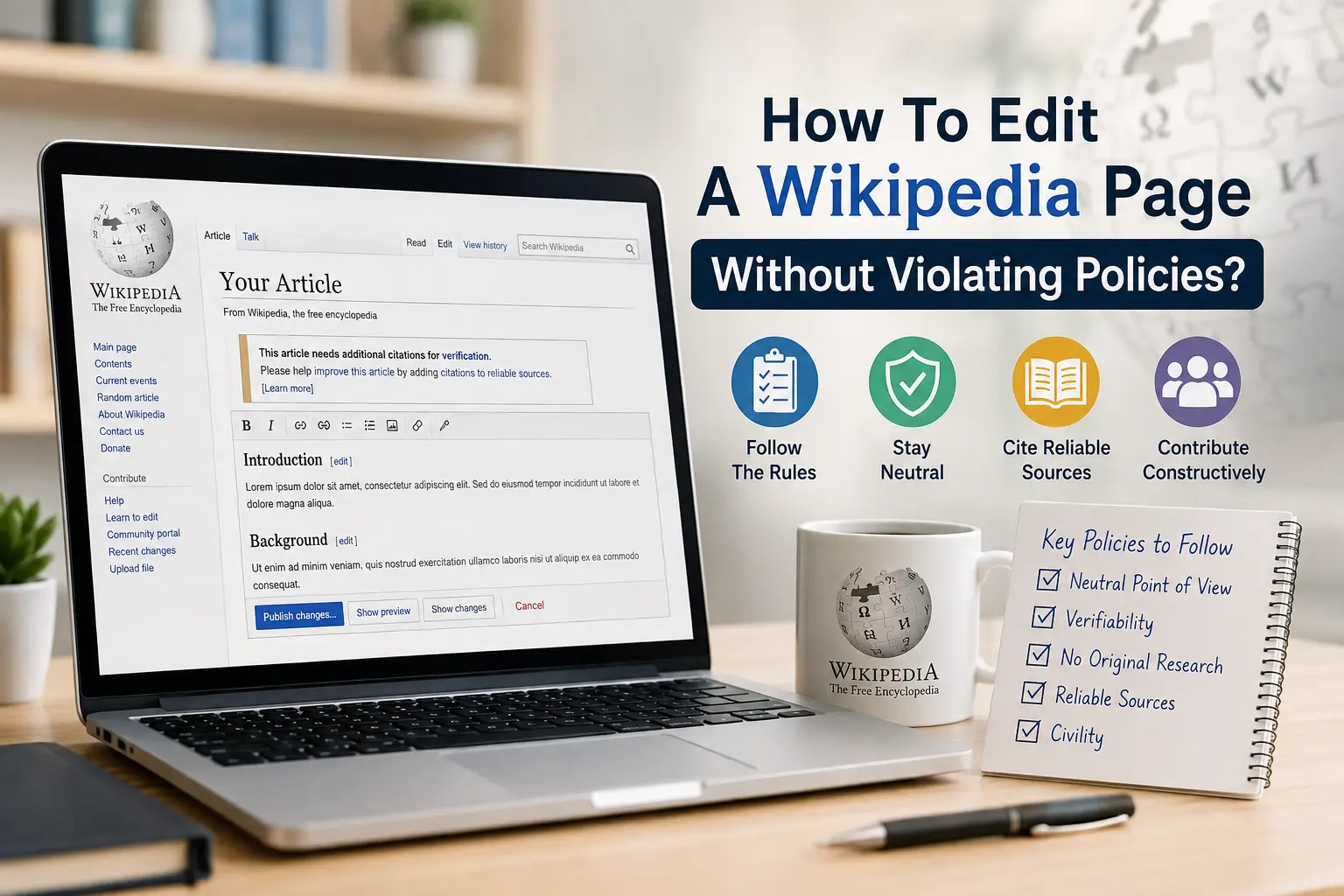
Editing Wikipedia may look as simple as changing a sentence and clicking “Publish.” But is it really that easy? Wikipedia has strict rules designed to keep its millions of articles accurate, neutral, and reliable. If you want to make an edit, understanding these rules first can save you from having your changes removed—or even losing your editing privileges.
Whether you are researching how to create a Wikipedia page, updating an existing article, or considering Wikipedia writing services, knowing Wikipedia’s eligibility and editing policies is essential.
Understand Wikipedia’s Core Policies
Wikipedia is built around a few important principles: neutrality, verifiability, and reliable sourcing. Every edit should improve an article rather than promote a person, company, product, or idea.
Think of Wikipedia like a public library. You cannot simply walk in and replace information with your personal opinion. Changes need to be supported by trustworthy evidence.
Keep your edits neutral. Avoid advertising language, exaggerated claims, or statements that make someone or something appear better than it is.
Check Whether Your Edit Is Eligible
Before editing, ask yourself: Does this information genuinely belong in the article?
Minor corrections, factual updates supported by reliable sources, and improvements to unclear wording may be appropriate. However, adding promotional content or unsupported claims can quickly result in your edit being reverted.
For larger changes, review the article’s discussion page first. Other editors may already be discussing the subject or have explained why certain information was removed.
A Wikipedia notability checker can also help when you are evaluating whether a person, business, organization, or topic may qualify for its own article. However, notability is ultimately determined through Wikipedia’s guidelines and the quality of available sources.
Use Reliable And Independent Sources
One of the most important rules is verifiability. Information should generally be supported by published, reliable sources.
Independent newspapers, books, reputable magazines, and established publications can be useful sources. Your company’s website, press release, or social media profile usually cannot establish the same level of independent coverage.
Before making an edit, check whether you can provide a source that directly supports the information. If you cannot, it may be better to leave the claim out.
Avoid Conflicts Of Interest
Are you editing an article about yourself, your employer, or your client? Be careful.
Wikipedia strongly discourages promotional editing and recommends transparency when you have a conflict of interest. Instead of directly making significant changes, you may be better off suggesting them on the article’s discussion page and allowing independent editors to review them.
This is particularly important for businesses interested in Wikipedia page creation. Having a website or being well-known in your industry does not automatically qualify you for a Wikipedia article.
When Professional Editors Can Help
Wikipedia policies can be confusing, especially when you are dealing with citations, neutrality, notability, and article structure. This is where professional Wikipedia editors can provide useful assistance.
Experienced editors can help identify sourcing problems, improve article structure, and explain whether proposed content fits Wikipedia’s guidelines. However, no legitimate service should guarantee that Wikipedia will publish or keep an article.
If you are considering Wikipedia writing services, look for providers that emphasize policy compliance rather than promising guaranteed publication.
Wikipedia Page Creation And Eligibility
If you are researching how to create a Wikipedia page, start with eligibility—not writing. First determine whether the subject has received significant coverage from independent, reliable sources.
If sufficient coverage does not exist, creating an article may be difficult regardless of how professionally it is written. Strong sources are the foundation; good writing comes afterward.
For businesses and public figures, patience is often important. Wikipedia is not a promotional platform, and an article should exist because the subject has earned meaningful coverage—not simply because someone wants a page.
Conclusion
Editing Wikipedia responsibly comes down to one question: Does your change make the encyclopedia more accurate, neutral, and useful? Check eligibility, use reliable independent sources, avoid promotional language, and disclose conflicts of interest when appropriate. By following these principles, you can contribute useful information without putting the article—or your account—at unnecessary risk.


 edwin noah
 Daniel Jack