Anderi Rasel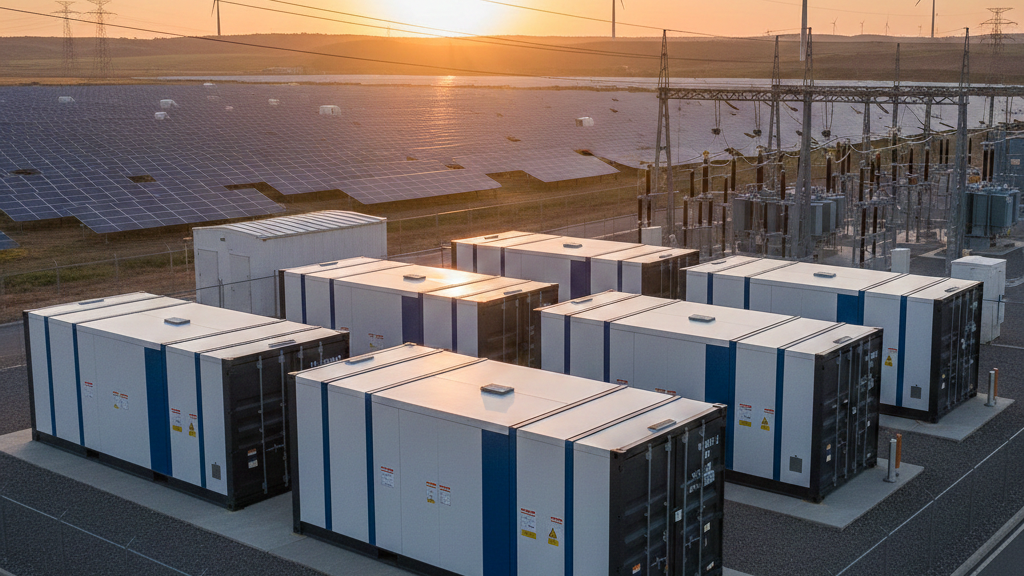
As demand for reliable energy storage continues to grow, businesses, utilities, data centers, telecom operators, and renewable-energy projects are looking for technologies that can deliver dependable power while reducing maintenance and long-term operating costs. This has increased interest in Graphene vs Lithium Ion as companies compare traditional battery systems with newer graphene-based and solid-state energy-storage technologies.
Lithium-ion batteries remain one of the most widely deployed rechargeable energy-storage technologies. Graphene-based systems, including electrostatic and solid-state approaches, are being developed to address some of the limitations associated with conventional chemical batteries, particularly in applications where rapid charging, high cycling frequency, safety, and long service life are important.
Graphene vs Lithium Ion Power Storage focuses on graphene-based solid-state batteries and supercapacitor technologies for commercial and industrial energy-storage applications. Its systems are designed for applications including critical infrastructure, telecom, renewable energy, microgrids, and large-scale energy storage. (Graphene Power Storage)
What Is Graphene Energy Storage?
Graphene is a carbon material consisting of a single layer of carbon atoms arranged in a honeycomb structure. It is known for properties including electrical conductivity, strength, and thermal conductivity.
In energy-storage systems, graphene can be used in different ways. It may serve as a material within battery electrodes, or it can be part of technologies that use electrostatic charge storage rather than conventional chemical reactions.
Graphene Power Storage describes its technology as using graphene-based solid-state batteries and supercapacitors, with products designed around long life, rapid power delivery, and reduced thermal risk.
This distinction is important because “graphene battery” is not a single standardized battery chemistry. Different manufacturers can use graphene in different architectures. Therefore, buyers should evaluate the specific technology and system specifications rather than assuming that every graphene product has identical performance.
What Is Lithium-Ion Energy Storage?
Lithium-ion batteries store energy through reversible electrochemical reactions involving lithium ions moving between electrodes.
They have become popular because they offer a useful combination of:
High energy density
Rechargeability
Mature manufacturing
Broad commercial availability
Established supply chains
Proven applications
Lithium-ion technology is used across consumer electronics, electric vehicles, backup power, renewable energy systems, and industrial applications.
However, lithium-ion systems can require thermal management and battery-management systems, and battery performance can change over time as cells age.
Graphene Power Storage contrasts its solid-state and electrostatic approach with conventional lithium-ion systems by emphasizing longer operating life, faster charging, and reduced thermal risk.
Graphene vs Lithium Ion: Key Differences
When comparing Graphene vs Lithium Ion, there are several important categories to evaluate.
Feature Graphene-Based Storage Conventional Lithium-Ion
Storage mechanism Can use solid-state or electrostatic architectures Electrochemical
Charging Designed for very rapid charging Typically slower
Cycle life Certain systems target extremely high cycling Varies significantly by chemistry and application
Thermal management Some systems are designed without active cooling Often requires thermal management
Degradation Certain electrostatic designs target minimal degradation Capacity generally declines with use and age
Safety Some solid-state designs eliminate flammable liquid electrolytes Safety depends on chemistry, design, controls, and thermal management
Applications Commercial, industrial, telecom, critical infrastructure Consumer, automotive, grid, commercial and industrial
The exact characteristics depend on the particular system, chemistry, operating profile, and manufacturer. Graphene Power Storage currently publishes significantly higher cycle-life and efficiency claims for its systems than the ranges it gives for lithium-based systems.
Charging Speed
Charging speed is one of the major areas of interest in the Graphene vs Lithium Ion comparison.
Conventional lithium-ion systems generally require controlled charging to protect cell health and manage heat. Charging time varies substantially according to battery size, chemistry, charger power, temperature, and battery-management settings.
Graphene-based and electrostatic technologies can be designed for much faster charge and discharge rates.
Graphene Power Storage states that its technology can charge in approximately 10 minutes, while its comparison page describes lithium-based systems as requiring multiple hours.
Its grid-scale ENPACK system is listed as capable of charging at up to 4C, demonstrating the company’s focus on high-rate energy transfer.
Fast charging can be valuable for applications that experience frequent energy fluctuations, short charging windows, or repeated high-power cycles.
Cycle Life
Cycle life is particularly important for commercial energy storage.
A cycle generally represents a full charge-and-discharge equivalent, although real-world definitions can vary depending on the system and measurement method.
Traditional lithium-ion battery life depends on chemistry, temperature, depth of discharge, charge rate, and operating conditions. Many systems are designed around thousands of cycles rather than hundreds of thousands.
Graphene Power Storage states that certain graphene-based systems can achieve more than 500,000 cycles. Its ENPACK grid-scale system, for example, is listed at more than 500,000 cycles at 1C.
The company’s comparison page lists 500,000 cycles for its graphene technology versus approximately 2,800–10,000 cycles for lithium-based systems.
For businesses that cycle storage frequently for peak shaving, backup, or power management, cycle life can have a major effect on long-term economics.
Battery Degradation
Battery degradation is another important consideration.
Lithium-ion batteries typically experience some capacity loss over their operating life. The rate depends on factors such as temperature, charging behavior, depth of discharge, chemistry, and operating conditions.
Graphene Power Storage positions its electrostatic technology differently. The company states that its solid-state design has no chemical degradation and maintains high efficiency over extended periods.
However, buyers should evaluate degradation using independently verified performance data for the specific system under consideration. Long-term performance claims should always be reviewed alongside warranty terms, operating conditions, and test methodology.
Safety Considerations
Safety is one of the most important factors when comparing energy-storage technologies.
Lithium-ion batteries contain electrochemical materials and, depending on chemistry and system design, can present thermal-runaway risks if cells are damaged, improperly charged, overheated, or otherwise driven outside their safe operating conditions.
Modern lithium-ion energy-storage systems can incorporate extensive safety controls, including:
Battery-management systems
Temperature monitoring
Fire detection
Thermal management
Safety disconnects
Containment systems
Graphene Power Storage’s systems are designed around solid-state and electrostatic technology and are marketed as having no thermal runaway risk. Its grid-scale system is described as having no thermal runaway risk, while its UPS solution is marketed without active cooling requirements.
The exact safety characteristics should always be assessed at the complete system level rather than based solely on the material name.
Thermal Management
Temperature management can affect both safety and performance.
Large lithium-ion installations may require cooling systems to keep cells within their recommended operating range. Cooling equipment can consume energy, occupy physical space, and add maintenance requirements.
Graphene Power Storage’s systems are designed to minimize or eliminate active thermal-management requirements in specified applications.
Its UPS system, for example, is described as requiring no cooling and operating without the heat-management requirements associated with lithium-based systems.
The company’s ENPACK grid-scale system is likewise marketed around “thermal-free” performance and no thermal runaway risk.
Efficiency
Round-trip efficiency measures how much energy can be recovered after charging and discharging a storage system.
Higher efficiency can reduce energy losses and improve operating economics.
Graphene Power Storage lists round-trip efficiency of approximately 98% for its graphene technology and 80–90% for lithium in its published comparison.
Its grid-scale ENPACK system is marketed as providing near-100% round-trip efficiency.
Actual performance depends on the complete system, power-conversion equipment, operating point, temperature, and charge-discharge profile.
Depth of Discharge
Depth of discharge, or DoD, describes how much of a battery’s usable capacity can be discharged during normal operation.
Graphene Power Storage’s comparison page states that its graphene system can be discharged to 100%, while it lists typical lithium use at approximately 70–80% depth of discharge.
The actual recommended DoD for lithium-ion systems varies by chemistry, manufacturer, warranty, and operating strategy. Many lithium systems can operate at higher DoD than the figure shown on Graphene Power Storage’s comparison page, so buyers should review the specific manufacturer’s warranty and usable-energy specification.
Operating Temperature
Temperature can be particularly important for outdoor, remote, industrial, and telecom applications.
Graphene Power Storage lists a safe operating range of approximately -25°F to 140°F for its graphene technology and 33°F to 120°F for lithium systems in its published comparison.
Its telecom storage solution is specifically marketed for extreme-temperature environments and remote locations where expensive HVAC systems can be undesirable.
For any energy-storage project, however, the actual system specification should be checked because operating limits can differ considerably between products.
Maintenance Requirements
Energy-storage systems require more than simply installing batteries and connecting them to a power system.
Maintenance may involve:
Thermal-management equipment
Battery monitoring
Electrical components
Fire protection
Cooling systems
Firmware
Connections
Environmental controls
Graphene Power Storage positions its systems as requiring minimal or zero routine maintenance in certain applications.
Its UPS product, for example, is described as maintenance-free with a 20-year life, while the company’s grid-scale ENPACK system is marketed as requiring no cooling, liquid handling, or chemical servicing.
Maintenance requirements should nevertheless be evaluated at the system level, including power electronics, controls, enclosures, and auxiliary components.
Total Cost of Ownership
Purchase price is only one part of the economics of energy storage.
A more complete analysis should include:
Initial equipment cost
Installation
Electrical integration
Cooling
Fire protection
Maintenance
Replacement cycles
Efficiency losses
Downtime
Financing
Disposal or recycling
Graphene Power Storage emphasizes long service life as a way to reduce replacement costs and total cost of ownership. Its comparison page says graphene systems are designed around a 15-year warranty and long-term operating life, while it describes lithium systems as requiring replacement as batteries age.
For a commercial installation, the best technology should be evaluated using a complete lifecycle-cost model rather than initial equipment price alone.
Graphene vs Lithium Ion for Data Centers
Data centers have demanding requirements because power interruptions can cause major operational and financial consequences.
Battery systems may be required for:
UPS backup
Power conditioning
Ride-through
Peak management
Emergency power
Graphene Power Storage offers a rack-mounted UPS and energy-storage solution specifically designed for data centers and critical infrastructure. The company states that its ENRACK system provides 100 kWh capacity and up to 350 kW burst power while using a compact design.
For facilities where space, thermal management, and uptime are significant concerns, a high-power energy-storage system can provide a different approach to conventional lithium UPS installations.
Graphene vs Lithium Ion for Telecom
Telecom towers often operate in remote locations and may have limited infrastructure for cooling and maintenance.
Energy storage may support:
Backup power
Off-grid operation
Solar integration
Generator support
Network continuity
Graphene Power Storage’s telecom solution is designed for on-grid and off-grid applications and can integrate with solar, wind, and generator sources. The company highlights rapid power delivery, temperature resilience, compact installation, and reduced thermal risk.
This makes long-life, low-maintenance storage particularly relevant for remote telecom deployments.
Graphene vs Lithium Ion for Renewable Energy
Solar and wind systems generate electricity according to weather conditions, while customers often need electricity continuously.
Energy storage bridges this difference by storing electricity when production is high and releasing it when demand increases.
Graphene Power Storage offers a grid-scale energy container system designed for grid, partial-grid, and microgrid installations. The company’s ENPACK system is available in 5 MWh and 10 MWh containerized configurations and supports long-duration or rapid discharge applications.
Graphene-based systems may therefore be considered for applications such as:
Solar storage
Wind integration
Microgrids
Peak shaving
Backup power
Distributed energy systems
Graphene vs Lithium Ion for Commercial Buildings
Commercial buildings may use energy storage to manage demand charges, provide backup power, integrate solar generation, or improve energy resilience.
Graphene Power Storage’s commercial-storage material highlights applications involving demand-charge reduction, backup power, and energy management.
For these projects, storage decisions should account for:
Peak demand profile
Energy tariff structure
Critical loads
Required backup duration
Available physical space
Utility interconnection
Local safety requirements
Expected cycling frequency
Environmental Considerations
The environmental impact of energy storage extends beyond the battery itself.
Considerations include:
Raw-material extraction
Manufacturing
Transportation
Operating energy losses
Maintenance
Replacement frequency
End-of-life recycling
Graphene Power Storage states that its graphene material can be approximately 99% recyclable and derived from materials including tires and plastics.
Lithium-ion batteries also have established recycling pathways, although recycling infrastructure and economics vary by chemistry and region.
A responsible environmental comparison should therefore evaluate the complete lifecycle of each technology.
Is Graphene Better Than Lithium Ion?
There is no universal answer for every application.
Lithium-ion technology remains a mature and widely deployed solution, with extensive manufacturing capacity and a broad ecosystem of suppliers, integrators, and service providers.
Graphene-based and electrostatic technologies can offer attractive characteristics in areas such as rapid charging, high cycling, long operating life, thermal behavior, and power delivery.
Graphene Power Storage argues that these characteristics make its systems particularly suitable for commercial and industrial applications where uptime, frequent cycling, and safety are priorities.
The correct choice should be based on the project’s actual duty cycle, required energy capacity, power requirements, physical footprint, environmental conditions, safety requirements, and total lifecycle cost.
Choosing an Energy Storage System
Before choosing between graphene and lithium-ion storage, project owners should establish clear performance requirements.
Consider:
Power requirement: How much instantaneous power must the system provide?
Energy capacity: How many kWh or MWh need to be stored?
Duration: How long must the system operate during an outage?
Cycling frequency: How often will the system charge and discharge?
Environment: Will it operate indoors, outdoors, or in extreme temperatures?
Space: How much physical room is available?
Safety: What fire, cooling, and permitting requirements apply?
Maintenance: How much ongoing service is acceptable?
Lifetime: How many years is the system expected to operate?
Economics: What is the total lifecycle cost?
This information provides a much stronger basis for technology selection than comparing battery labels alone.
Why Choose Graphene Power Storage?
Graphene Power Storage specializes in graphene-based solid-state and electrostatic energy-storage technologies for commercial and industrial applications.
Its product portfolio includes:
Graphene Energy Container System
Graphene UPS & Critical Infrastructure Backup
Graphene SuperCap Telecom Module
Intelligent Graphene Energy Control Hub
Electrostatic Long Duration Storage Module
The company’s applications span grid-scale energy storage, microgrids, telecom, data centers, critical infrastructure, renewable energy, and other industrial use cases. (Graphene Power Storage)
For businesses comparing Graphene vs Lithium Ion, the company also provides a dedicated comparison page explaining the performance characteristics of its technology and the applications it is designed to serve.
Explore Graphene vs Lithium Ion
View Graphene Energy Storage Systems
Explore Grid-Scale Energy Storage
Final Thoughts on Graphene vs Lithium Ion
The Graphene vs Lithium Ion discussion reflects a broader shift in energy storage toward systems that can deliver higher power, longer operating life, improved safety, and lower lifecycle costs.
Lithium-ion remains a mature and widely used technology, making it an established choice for many applications. Graphene-based solid-state and electrostatic systems represent a different approach, with the potential for very rapid charging, extremely high cycling capability, reduced thermal-management requirements, and long service life.
The right choice depends on the application. Data centers may prioritize instantaneous response and thermal safety. Telecom operators may value compact systems with long life and minimal maintenance. Renewable-energy projects may prioritize large energy capacity, cycling performance, efficiency, and long-duration operation.
Graphene Power Storage offers systems designed for these commercial and industrial requirements, including grid-scale containerized storage, critical-infrastructure UPS systems, telecom storage, and modular electrostatic storage.
For organizations evaluating Graphene vs Lithium Ion, the best starting point is a detailed assessment of the site’s power demand, storage duration, cycling profile, safety requirements, available space, and total cost of ownership.