Rubber Silicone Molds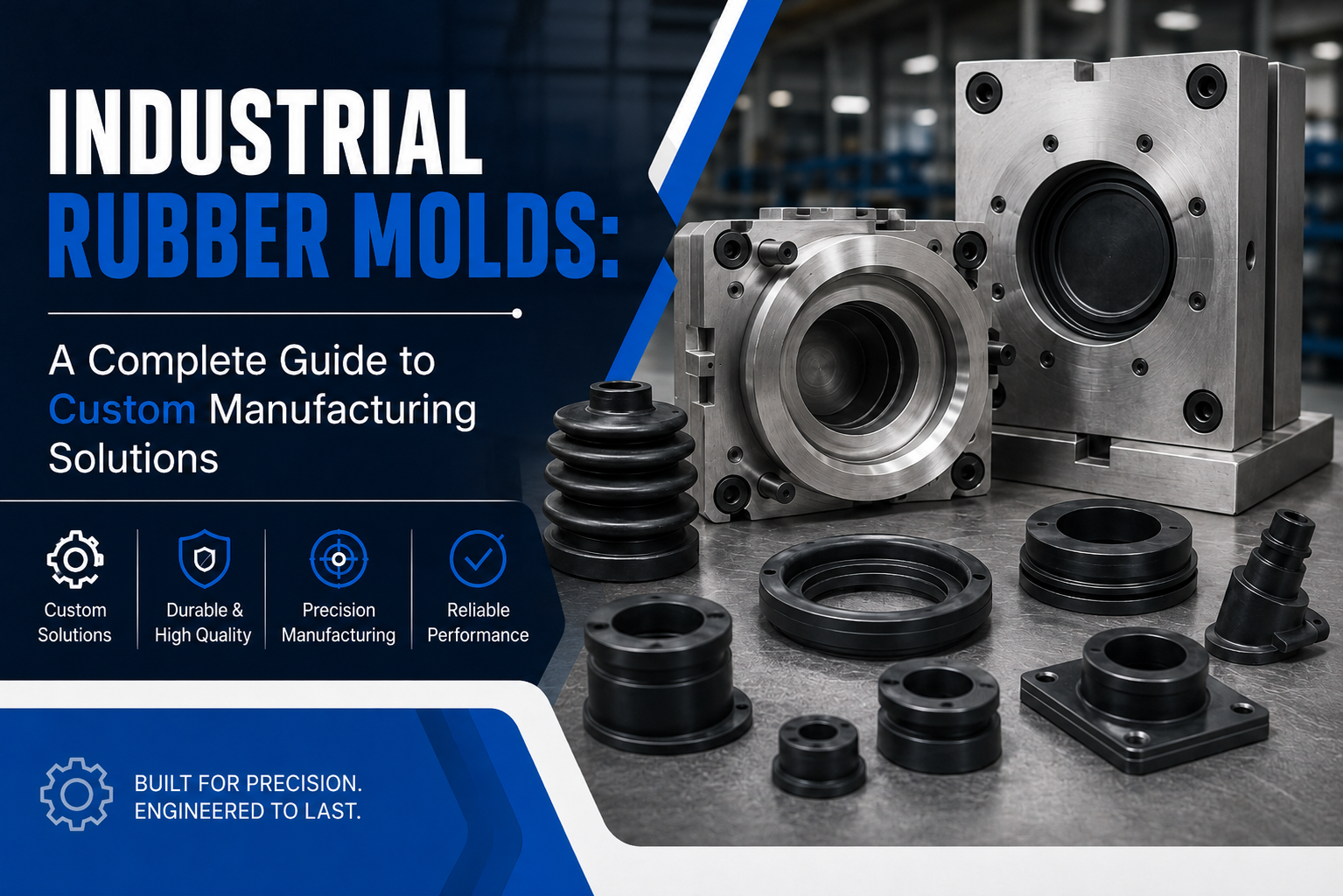
Most mold discussions begin with drawings, lead times, and budgets. A few production runs later, the conversation often shifts. Parts may start sticking during removal. Trim work takes longer than expected. Dimensions drift slightly from one batch to another. None of these issues looks dramatic on paper, yet they can quietly slow production and increase waste over time.
That is one reason industrial rubber molds receive so much attention during product development. Once manufacturing starts, the mold becomes part of the daily routine. If it performs well, production keeps moving. If it does not, the problems tend to show up repeatedly.
Production challenges usually appear after testing
A prototype run can look promising.
Then production volumes increase.
Operators handle parts more frequently. Cycle counts rise. Small inconsistencies that barely appeared during testing start becoming easier to spot. Sometimes the issue comes from the material. Sometimes it comes from the process. Quite often, the tooling is involved somewhere in the discussion.
Most factories are not focused on mold design itself. They are focused on output, delivery schedules, scrap levels, and keeping machines running. Tooling only becomes a topic when something begins slowing those goals down.
One manufacturer producing sealing components discovered that minor tearing around a molded edge kept appearing during production. Several process adjustments were tried first. The issue eventually traced back to how the part was releasing from the mold.
Situations like that happen more often than people think.
Why tooling affects more than just shape
It is easy to assume that a mold simply creates the required geometry.
Production teams usually see a much bigger picture.
Release consistency, surface finish, trimming effort, cycle stability, and repeatability can all be influenced by tooling decisions. A part may meet dimensional requirements and still create headaches if operators struggle to remove it efficiently.
That relationship becomes especially important when manufacturing industrial rubber products intended for long-term service. Components such as gaskets, vibration mounts, protective boots, and sealing elements are often expected to perform for years without attracting attention. The challenge is that consistency starts long before the finished product reaches the customer.
When standard tooling stops being enough
Some components are relatively straightforward.
Others are not.
Deep recesses, thin wall sections, aggressive undercuts, textured surfaces, and unusual sealing features can all complicate production. The drawing may appear manageable during design review, but real-world manufacturing sometimes exposes difficulties that were easy to overlook.
That is often where industrial rubber molds begin delivering the most value.
Instead of adapting the product to fit a standard mold design, manufacturers can develop tooling around the specific requirements of the component. In many situations, that approach reduces handling issues and creates a more predictable production process.
A molded vibration-control part used in industrial equipment provides a good example. The component repeatedly showed defects near a mounting feature. Material changes produced little improvement. Once the tooling geometry was revised, the problem largely disappeared.
The material never changed. The mold did.
The link between molds and industrial rubber products
Many industrial rubber products spend their entire service life out of sight.
A gasket sits between mating surfaces. A rubber boot protects moving parts from contamination. A vibration isolator absorbs movement inside a machine. Most users never think about them unless something fails.
From a manufacturing perspective, however, producing those components consistently is rarely as simple as it appears.
A slight variation in wall thickness can affect flexibility. A minor dimensional change can influence fit. Surface defects that seem cosmetic during inspection may create assembly concerns later.
That is why experienced manufacturers often spend considerable time evaluating tooling before large-scale production begins.
Fixing problems on a drawing is usually easier than fixing them after thousands of parts have already been produced.
Why silicone mold making remains common during development
Product development has a habit of changing direction.
Engineers refine designs. Customers request modifications. Performance testing uncovers details that were not obvious during initial reviews.
Committing immediately to expensive production tooling does not always make sense when those changes are still happening.
That practical reality helps explain why silicone mold making remains widely used during development work.
Flexible tooling gives manufacturers an opportunity to evaluate parts, review fitment, and identify concerns before investing heavily in permanent molds.
I have seen projects where a design looked finalized for weeks, only for testing to reveal a small issue that required a geometry change. Finding that problem early is usually far less painful than discovering it after hard tooling has already been completed.
For many manufacturers, that remains one of the biggest advantages of silicone mold making.
Where food-grade silicone molds are commonly used
Some industries place additional requirements on manufacturing processes.
Food-processing equipment, beverage systems, consumer kitchen products, and dispensing applications often require materials suited for controlled environments.
That is where food grade silicone molds frequently enter the picture.
The discussion is not only about dimensions or appearance. Manufacturers may also consider cleaning procedures, material compatibility, and production requirements specific to the application.
Demand for food grade silicone molds has grown alongside the development of more specialized products. As designs become more detailed, tooling often has to adapt as well.
Looking beyond tooling cost
Cost always matters.
At the same time, most production teams eventually learn that the cheapest tooling option is not always the least expensive decision over the life of a project.
A mold that produces consistent parts, minimizes rework, and avoids recurring production interruptions can influence costs long after the initial purchase is forgotten.
That is one reason manufacturers continue investing in well-designed industrial rubber molds. The discussion may start with tooling cost, but it rarely ends there.
Conclusion
Most molds do their job quietly.
Nobody talks much about tooling when parts are releasing cleanly, dimensions stay within tolerance, and production targets are being met. Attention usually arrives when something starts causing delays, scrap, or unnecessary adjustments on the shop floor.
That is why mold design deserves more attention than it sometimes receives during early project discussions.
A component can be redesigned. Materials can be changed. Production schedules can be adjusted. Tooling changes are often more disruptive once manufacturing is already underway.
Companies working with industrial rubber molds generally discover the same thing over time. The mold itself may be hidden behind the production process, but it has a habit of influencing nearly every stage that comes after it.
Frequently Asked Questions
- What are industrial rubber molds used for?
You will find them behind all kinds of rubber components. A small gasket inside a pump, a protective boot on industrial equipment, a vibration mount under machinery all of these generally start with a mold somewhere in the production process.
- Why are custom molds important in rubber manufacturing?
Mostly because not every part behaves the same way during production. A simple gasket is one thing. A component with thin walls, deep sections, or complex sealing features is another. Custom tooling helps deal with those challenges before they become production issues.
- What industries use industrial rubber products?
Pretty much every manufacturing sector uses them in some form. Automotive companies use them. Food-processing equipment uses them. You will also see them in construction machinery, HVAC systems, agricultural equipment, and electrical products.
- Why is silicone mold making useful during product development?
Designs rarely stay unchanged from the first drawing to final production. Engineers make adjustments, customers request modifications, and testing sometimes reveals unexpected issues. Silicone tooling gives manufacturers a way to work through those changes without immediately committing to expensive hard tooling.
- Where are food grade silicone molds commonly used?
Most often in products that come into direct or indirect contact with food. Processing equipment, dispensing systems, packaging components, and kitchen-related products are common examples.
CTA
Thinking about a new molded component?
It is usually worth discussing the mold design and tooling approach before production schedules are finalized. Small details on a drawing can affect molding, trimming, assembly, and even inspection later on. A short conversation early in the project often prevents much larger discussions once production is already underway.

 Daniel Jack