Sonpal Singh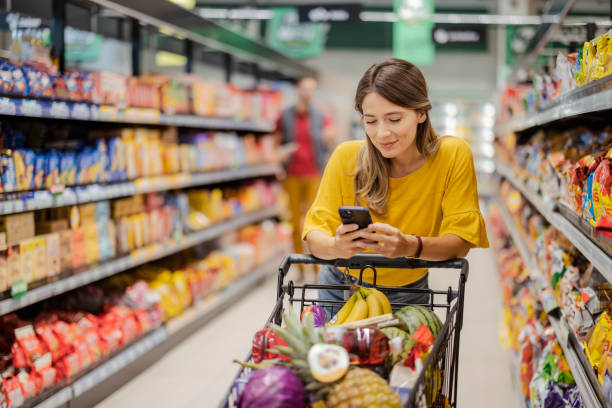
The retail ecosystem across the Kingdom of Saudi Arabia is undergoing a major digital transformation. Driven by rapid technological advancement, widespread smartphone adoption, and shifting consumer preferences toward convenience-oriented shopping solutions, the Saudi Arabia Online Grocery Market has established itself as an essential component of the nation’s digital economy. Rapid urbanization, an increase in dual-income households, and government-led initiatives promoting e-commerce infrastructure continue to reshape daily purchasing habits across the country.
Below is an in-depth, data-driven analysis of the Saudi Arabia online grocery market size, core growth drivers, market segmentation, regional distribution, competitive landscape, and recent trends shaping the industry through 2034.
Market Overview
The Saudi Arabia online grocery market was valued at USD 1,788.72 Million in 2025.
According to latest market research data from IMARC Group, the industry is projected to reach USD 6,409.27 Million by 2034, expanding at a robust Compound Annual Growth Rate (CAGR) of 15.24% over the forecast period from 2026 to 2034.
This double-digit expansion reflects the convergence of an advanced digital ecosystem, supportive regulatory frameworks, and progressive economic diversification agendas under Saudi Arabia’s Vision 2030.
Key Market Growth Drivers
Several technological, demographic, and policy-driven factors are accelerating the adoption of online grocery shopping across Saudi Arabian households:
- Exceptional Digital Infrastructure and Connectivity
Saudi Arabia’s world-class digital infrastructure forms the foundation for sustained market growth. High-speed internet penetration approaches universal coverage, with mobile usage dominating consumer activity. Over 99% of internet usage in the Kingdom occurs through smartphones, supported by expanding 5G networks and fiber-optic infrastructure rollout supervised by the Communications, Space and Technology Commission.
- Proliferation of Quick Commerce and Dark Store Networks
The rapid expansion of quick commerce platforms and micro-fulfillment infrastructure is fundamentally changing customer expectations. Platforms are establishing localized dark store networks within prime urban neighborhoods to enable delivery windows under one hour. HungerStation’s Quick Market network, for example, achieves coverage serving nearly 95% of the Kingdom with sub-hour delivery times, positioning inventory closer to urban populations and drastically improving product freshness.
- Favorable Demographics and Evolving Consumer Lifestyles
Saudi Arabia’s demographic profile presents significant market opportunities, with over 73% of the population within the working-age bracket and heavily concentrated in major metropolitan centers. Smartphone ownership exceeds 90%, fueling mobile-first shopping behaviors. Additionally, rising female workforce participation increases the prevalence of dual-income households, creating greater demand for time-saving, doorstep grocery delivery solutions.
Explore in-depth findings for this market:
https://www.imarcgroup.com/saudi-arabia-online-grocery-market/requestsample
Key Market Segmentation
The Saudi Arabian online grocery market is segmented across five key categories: product type, business model, platform, purchase type, and geographic region.
Breakup by Product Type
- Vegetables and Fruits: Dominates the market with a leading 31.92% share in 2025. Demand is driven by rising health consciousness and a growing preference for fresh, organic produce delivered directly to doorsteps. Expanded cold chain capabilities and local agricultural funding – such as the Saudi Agricultural Development Fund’s projected USD 2 Billion approval in April 2025 for advanced farming – further reinforce supply freshness and segment growth.
- Dairy Products: High-frequency essential category benefiting from cold chain logistics.
- Staples and Cooking Essentials: Core household pantry items ordered in regular recurring cycles.
- Snacks: Driven by quick-commerce impulse purchases and immediate fulfillment needs.
- Meat and Seafood: Growing demand supported by temperature-controlled delivery networks.
- Others
Breakup by Business Model
- Hybrid Marketplace: Leads the market with a 52.8% share in 2025. This model combines owned inventory management for critical categories like fresh produce with third-party vendor partnerships. Major retail conglomerates are investing heavily in hub infrastructure that merges physical store and dark-store inventories to optimize logistics and product availability.
- Pure Marketplace: Aggregates third-party grocers and local vendors onto a single platform.
- Others
Breakup by Platform
- App-Based: Exhibits clear dominance with a 68.02% market share in 2025. Reflecting the Kingdom’s mobile-first culture, app platforms offer personalized recommendations, real-time GPS tracking, biometric payments, and loyalty features that yield high customer retention.
- Web-Based: Serves desktop users and institutional/office provisioning customers.
Breakup by Purchase Type
- One-Time: Commands the market with an 82.86% share in 2025. Consumers strongly favor flexible, on-demand purchasing without recurring commitments, perfectly aligning with instant-gratification quick commerce delivery.
- Subscription: Gaining gradual traction for predictable, routine household staples and produce deliveries.
Breakup by Country / Regional Distribution
Online grocery demand across Saudi Arabia is categorized across four major geographic regions:
- Northern and Central Region: Dominates the national market with a 50% share in 2025. Anchored by Riyadh, the region leads due to high population density, high household income levels, superior digital infrastructure, and extensive dark store coverage.
- Western Region: Driven by major urban hubs including Jeddah, Mecca, and Medina, benefiting from high commercial activity and dense residential zones.
- Eastern Region: Supported by industrial centers such as Dammam, Khobar, and Jubail, with strong demand from tech-savvy corporate workforce communities.
- Southern Region: An emerging regional market benefiting from expanding internet connectivity and regional infrastructure development.
Ask For report Customization:
https://www.imarcgroup.com/request?type=report&id=20887&flag=E
Competitive Landscape: Key Market Players
The market features vibrant competition among domestic platforms, international e-commerce players, and traditional retail conglomerates expanding into omnichannel sales. Major operators focus on scaling dark store coverage, optimizing AI-driven delivery logistics, implementing micro-fulfillment automation, and enhancing digital payment integration.
Key market initiatives focus on leveraging artificial intelligence for demand forecasting—especially during peak seasons like Ramadan—to maintain optimal stock levels, lower fulfillment costs, and ensure fast delivery service.
Recent News & Market Trends
- Quick Commerce Transformation: Super-fast delivery models promising sub-30-minute fulfillment are rapidly expanding across high-density neighborhoods, turning localized micro-fulfillment centers into critical retail assets.
- AI Integration in Supply Chain: Operators are deploying machine learning algorithms for demand prediction during major cultural events like Ramadan, while route optimization software minimizes fleet costs and ensures delivery reliability across urban centers.
- Agricultural Development Backing: Strategic investments, including the Saudi Agricultural Development Fund’s projected USD 2 Billion support in April 2025 for high-tech farming, aim to secure local produce supply chains and support online fresh grocery delivery networks.
About Us:
IMARC Group is a global management consulting firm that helps the world’s most ambitious changemakers to create a lasting impact. The company provide a comprehensive suite of market entry and expansion services. IMARC offerings include thorough market assessment, feasibility studies, company incorporation assistance, factory setup support, regulatory approvals and licensing navigation, branding, marketing and sales strategies, competitive landscape and benchmarking analyses, pricing and cost research, and procurement research.
Contact Us:
IMARC Group‚
134 N 4th St‚ Brooklyn‚ NY 11249‚ US
Email: sales@imarcgroup․com
Tel No: (D) +91 120 433 0800
United States: (+1–201–971–6302)

 Online Services
 AAA Auger