Sonpal Singh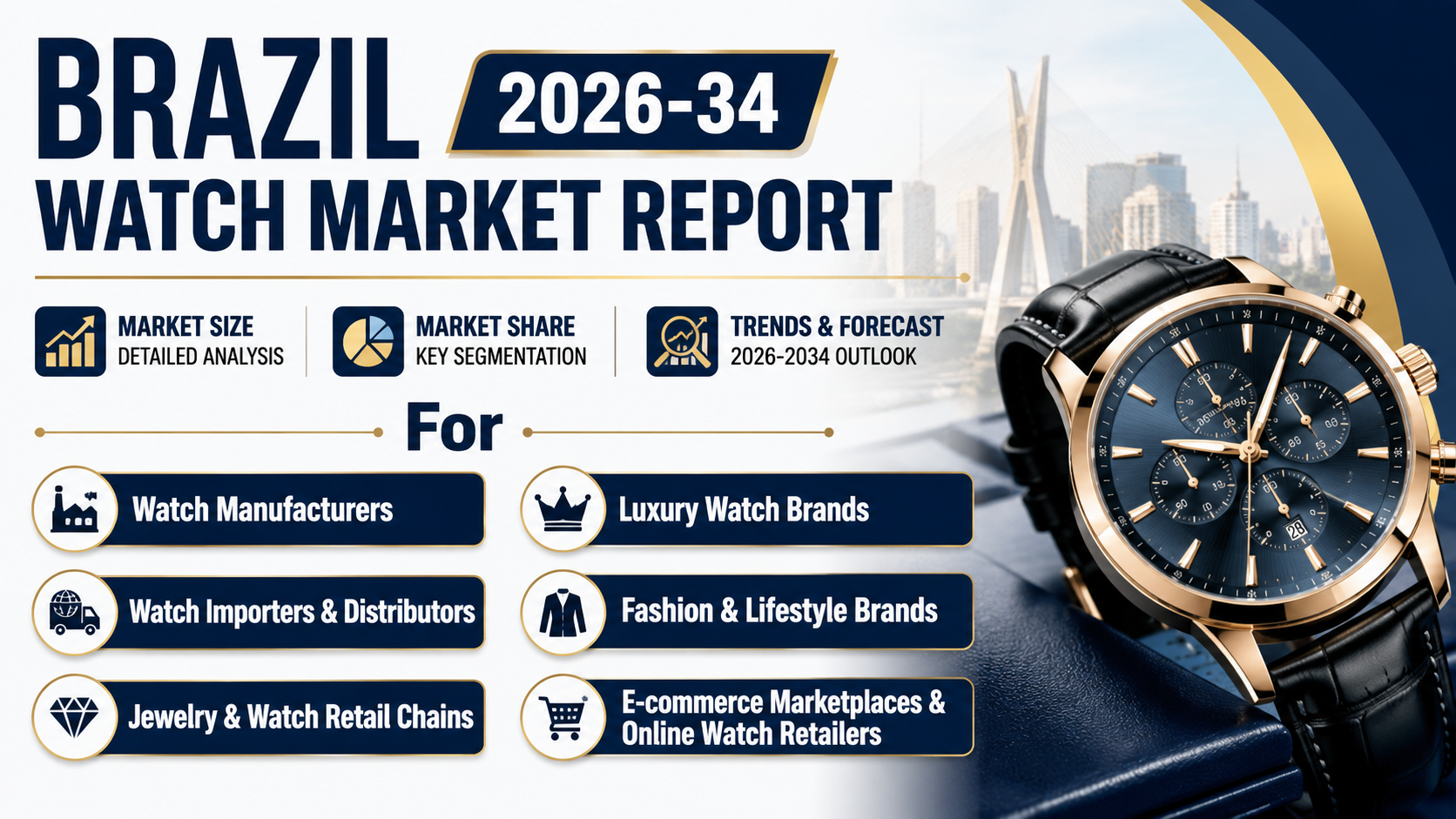
The Brazil watch market is experiencing steady, highly resilient expansion. Driven by an expanding urban middle class, growing fashion awareness, and the mass adoption of flexible e-commerce platforms, the industry has transitioned into a highly dynamic retail sector catering to both classic tastes and modern fashion trends.
Brazil Watch Market Overview:
According to comprehensive retail research from the IMARC Group Brazil Watch Market Report, the domestic horology sector has achieved massive commercial scale. The market valuation officially reached USD 1,757.77 Million in 2025, solidifying its position as a dominant luxury and lifestyle accessory pillar within Latin America.
Reflecting evolving consumer purchasing power and an increasing appetite for high-quality accessories, the industry is projected to experience steady, long-term expansion over the next decade. By the year 2034, the market size is forecasted to reach USD 2,515.04 Million. This upward trajectory represents a consistent compound annual growth rate (CAGR) of 4.06% during the strategic forecast period spanning 2026-2034.
Key Market Growth Drivers:
The growth of the watch industry across Brazil is propelled by four distinct, highly interconnected market forces:
- Growing Middle-Class and Rising Disposable Incomes
Brazil’s expanding middle class serves as a primary engine for the watch market. As household income levels experience measurable improvements, consumer spending is shifting decisively toward lifestyle upgrades and premium fashion accessories. According to data tracked by CEIC, Brazilian households’ disposable income figures reached a historic 735,327,000,000.000 BRL in February 2025.
Because timepieces are no longer viewed only as functional timekeeping devices but as statements of personal status and style, consumers are increasingly comfortable investing in branded products. This trend is particularly evident across dense urban areas where financial mobility allows individuals to transition from low-end microbrands to established mid-range and premium labels.
- Increasing Fashion Awareness and Brand Consciousness
Brazilian consumers, particularly younger demographics, are becoming deeply style-conscious and brand-aware. Global fashion trends, celebrity endorsements, and social media platforms heavily dictate modern purchase decisions. By January 2024, Brazil boasted 144.0 Million active social media users, accounting for 66.3% of its entire population.
This immense digital connectivity exposes buyers to limited-edition releases and luxury watch aesthetics daily. As watches are increasingly treated as essential fashion accessories that must match specific outfits or personal identities, manufacturers are successfully capturing a younger, trend-driven customer base through visually striking designs.
- Expansion of E-Commerce and Digital Retail Channels
The rapid optimization of digital storefronts has radically enhanced product accessibility across the nation. The general Brazil e-commerce market size reached USD 513.3 Billion in 2025, providing an established, highly trusted infrastructure for watch retail.
Online distribution allows consumers to seamlessly compare prices, read peer reviews, explore international inventories, and shop safely from home. Furthermore, targeted online discounts and flexible installment payment options encourage higher discretionary spending on premium models, while allowing smaller, independent watch brands to achieve nationwide reach without costly physical storefronts.
- Youth Population, Flexible Payments, and Tourism Boosts
Demographic and institutional factors provide an additional layer of market support:
- Youth Demand: In 2025, individuals aged 15 to 24 comprised 14.7% of Brazil’s overall population (UN WPP 2024), establishing a massive consumer base that thrives on trend-driven consumption and frequent accessory upgrades.
- Mobile Finance: The mobile payment ecosystem reached USD 67.0 Billion in 2025, offering frictionless installment plans that reduce upfront financial pressure when buying mid-range or luxury items.
- Tourism Influx: In 2024, more than 6.621 Million international tourists visited Brazil, surpassing previous arrival records and driving massive seasonal souvenir and gift purchases in travel retail hubs.
Key Market Segmentation:
To satisfy the multi-faceted demands of the modern consumer, the Brazilian watch sector is structurally categorized across distinct segments:
Breakup by Type:
- Quartz Watches: The absolute dominant force in the market, capturing a commanding 60% market share in 2025. Quartz movements lead due to their exceptional chronological accuracy, low maintenance requirements, and competitive pricing, making them highly attractive to budget-conscious buyers seeking reliable everyday performance.
- Mechanical Watches: Representing the premium and artisanal side of horology, favored by collectors, luxury enthusiasts, and individuals valuing traditional automatic movements and craftsmanship.
Breakup by Price Range:
- Mid-Range Watches: The leading price segment, accounting for a 35% market share in 2025. This category thrives because it offers the ultimate balance of durability, brand prestige, and style at accessible midpoints. It appeals to a broad demographic of working professionals who utilize structured installment payments to upgrade their collections.
- Low-Range Watches: Highly accessible entry-level options focusing on pure utility, basic sport features, and mass-market affordability.
- Luxury Watches: Elite tier timepieces featuring precious materials, complex complications, and high brand heritage, supported by high-income earners.
Breakup by Distribution Channel:
- Offline Retail Stores: Maintaining a massive commanding presence with a 75% market share in 2025. Physical retail remains dominant because Brazilian consumers strongly prefer tactile product evaluation – allowing them to feel the weight, fit, and comfort of a watch before purchasing. Authorized brick-and-mortar dealers also offer instant ownership, trusted authenticity verification, and personalized after-sales repairs.
- Online Retail Stores: Growing at a rapid pace, serving tech-savvy consumers through convenient home delivery and extensive digital catalogs.
Breakup by End User:
- Men: The leading end-user segment, commanding a 55% market share in 2025. Watches remain the primary fashion statement and collectible accessory for male consumers across corporate, casual, and sporting environments, heavily supported by traditional marketing campaigns focused on masculine sophistication and achievement.
- Women: A highly vibrant segment focusing on watch designs that double as fine jewelry, elegant wristwear, and high-fashion accessories.
- Unisex: Minimalist and versatile timepieces featuring neutral sizing and clean aesthetics that appeal equally across demographics.
Sample Request For Your Business
Regional Insights: Breakup by Major Territories
The consumption density and retail infrastructure of horology are distributed across Brazil’s distinct geographic economic regions:
- Southeast: The undisputed economic anchor of the Brazilian watch market. Characterized by higher disposable incomes, dense urban populations, and premier commercial infrastructures, major metropolitan centers like São Paulo and Rio de Janeiro dictate national style trends and host elite luxury flagship properties.
- South: A stable, high-growth region defined by consistent purchasing power and organized retail networks. Consumers here show a strong preference for high durability, structural quality, and trusted mid-range brand names.
- Northeast: Driven predominantly by coastal urban development and high tourism volumes. Demand leans heavily toward trendy fashion watches, casual designs, and affordable mid-range options.
- North: A territory heavily reliant on durable, practical watch structures adapted to regional climates, experiencing gradual expansion via rising mobile e-commerce penetration.
- Central-West: Fueled by growing urban wealth stemming from thriving regional agriculture, trade, and corporate government sectors, leading to a steady increase in premium smart-casual and professional watch purchases.
Competitive Landscape:
The operational environment within Brazil features a competitive mix of iconic international watchmaking conglomerates, global fashion houses, and localized manufacturers. Major brands actively differentiate themselves through structural material innovations, deep cultural marketing campaigns, and aggressive omnichannel distribution strategies. Navigating import tariffs and managing strict supply chain logistics remain critical operational focuses for companies looking to sustain high retail margins.
Recent News and Strategic Market Developments:
Corporate brands are continuously investing in localized experiences and heritage-driven product lines to expand their Brazilian footprints:
- Tiffany & Co. Flagship (January 2025): The luxury jeweler officially opened its grand flagship store at Iguatemi São Paulo. Reflecting the growing demand for high-end horology, the prestigious layout features a dedicated, exclusive space specifically designed for luxury watch collections.
- TAG Heuer “Senna” Series (November 2025): Capitalizing on profound local heritage, TAG Heuer launched its highly anticipated “New Senna Formula 1 Series,” capturing the essence of the legendary Brazilian racing driver. The rollout features an advanced 44mm automatic version crafted with a black DLC titanium case and forged carbon bezel, alongside a highly stylish 43mm quartz iteration that reintroduces the iconic, nostalgic S/EL bracelet design to Brazilian collectors.
About Us:
IMARC Group is a global management consulting firm that helps the world’s most ambitious changemakers to create a lasting impact. The company provide a comprehensive suite of market entry and expansion services. IMARC offerings include thorough market assessment, feasibility studies, company incorporation assistance, factory setup support, regulatory approvals and licensing navigation, branding, marketing and sales strategies, competitive landscape and benchmarking analyses, pricing and cost research, and procurement research.
Contact Us:
IMARC Group‚
134 N 4th St‚ Brooklyn‚ NY 11249‚ US
Email: sales@imarcgroup․com
Tel No: (D) +91 120 433 0800
United States: (+1–201–971–6302)


 The Unmute
 Imathew Jaxson