john mark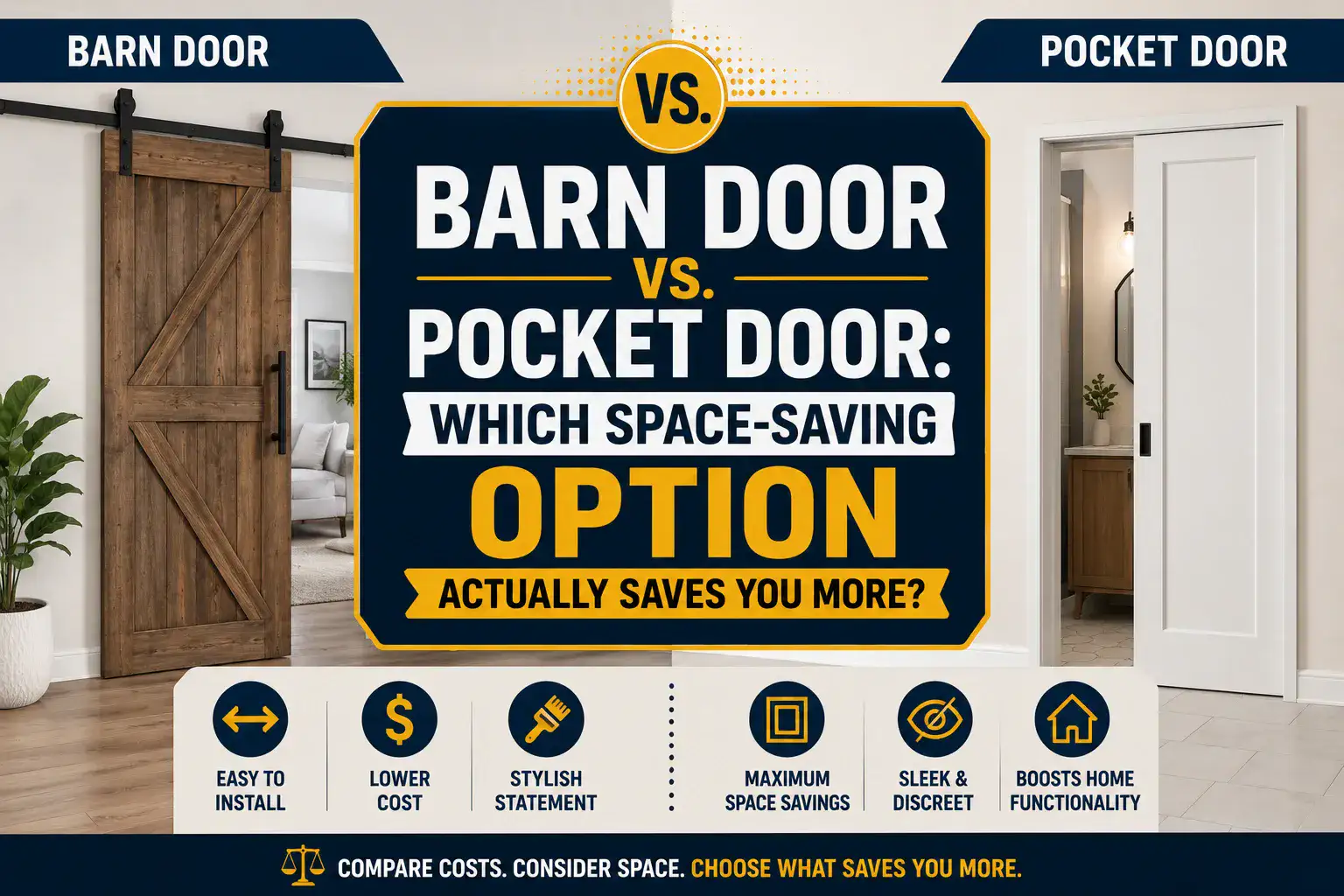
Tight bathrooms, small laundry rooms, and cramped hallways all run into the same problem eventually: a swinging door eats up floor space that the room simply doesn’t have to spare. Two solutions dominate the renovation conversation for sliding barn doors and pocket doors and homeowners often assume they’re interchangeable. They’re not, and picking the wrong one for your space and budget is an easy mistake to make.
Here’s how they actually compare.
How Each One Works
A pocket door slides directly into a cavity built inside the wall itself, disappearing completely when open. Nothing is visible on either side of the doorway once it’s slid in.
A barn door hangs from an exterior track mounted above the doorway and slides along the face of the wall, staying visible at all times, even when fully open.
That single structural difference inside the wall versus on the surface of it drives almost every other tradeoff between the two options.
Installation Complexity: Barn Doors Win for Existing Walls
This is where the two options diverge most sharply. A pocket door installed into an existing wall usually requires opening up the wall, removing or relocating anything inside it (wiring, plumbing, insulation), and building a new frame to house the door when it’s open. This is significantly more invasive and more expensive than installing a pocket door during new construction, when the wall cavity can be built correctly from the start.
A barn door, by contrast, mounts entirely on the wall’s surface. There’s no demolition, no cavity to build, and no need to worry about what’s hiding inside the wall. For a retrofit project on an older home, this alone often settles the decision.
Space Savings: Pocket Doors Actually Win Here
It’s a common misconception that barn doors save more space, but a barn door still needs a full swing-width of clear wall space beside the doorway to slide into when open space that can’t hold a light switch, outlet, artwork, or furniture. A pocket door, once open, occupies zero wall space on either side, which makes it the better choice for genuinely tight layouts like small bathrooms or narrow hallways.
Sound and Privacy: Pocket Doors Have the Edge
Because a pocket door sits within a frame and typically seals more like a standard door, it generally offers better sound dampening and privacy than a barn door, which usually has visible gaps around its edges by design. For bedrooms, bathrooms, or home offices where privacy matters, this is a real consideration, not just a minor detail.
Aesthetic and Style: Largely Personal Preference
Barn doors have become a strong design statement in farmhouse and modern-rustic interiors; the hardware itself is often meant to be seen. Pocket doors are closer to invisible design, blending into the wall when open and looking like a standard door when closed. Neither is objectively better here; it comes down to whether you want the door to be a visible design feature or disappear entirely.
Cost Comparison
Barn door hardware and installation tends to be less expensive for retrofit projects specifically because there’s no wall demolition or reframing involved; you’re mainly paying for the track, door, and mounting labor. Pocket doors can be very affordable in new construction, where the wall cavity is built once as part of the framing process, but retrofitting one into an existing wall adds real cost for the demolition, reframing, and any relocated wiring or plumbing.
If you’re weighing a pocket door specifically and want a detailed breakdown of what drives the price up or down door size, material, single versus double configurations, and new construction versus existing wall retrofits, this guide on the cost to install a pocket door covers the full pricing picture in detail.
Which One Should You Actually Choose?
If you’re renovating an existing home and want a simpler, less invasive project, a barn door is usually the more practical choice. If you’re building new or already have the wall open for other work, and space savings and privacy matter more than visible style, a pocket door is worth the extra upfront investment.
Neither option is a wrong choice; it’s really a question of what your wall, your budget, and your room’s layout can actually accommodate.

 Daniel Jack