Helen Grace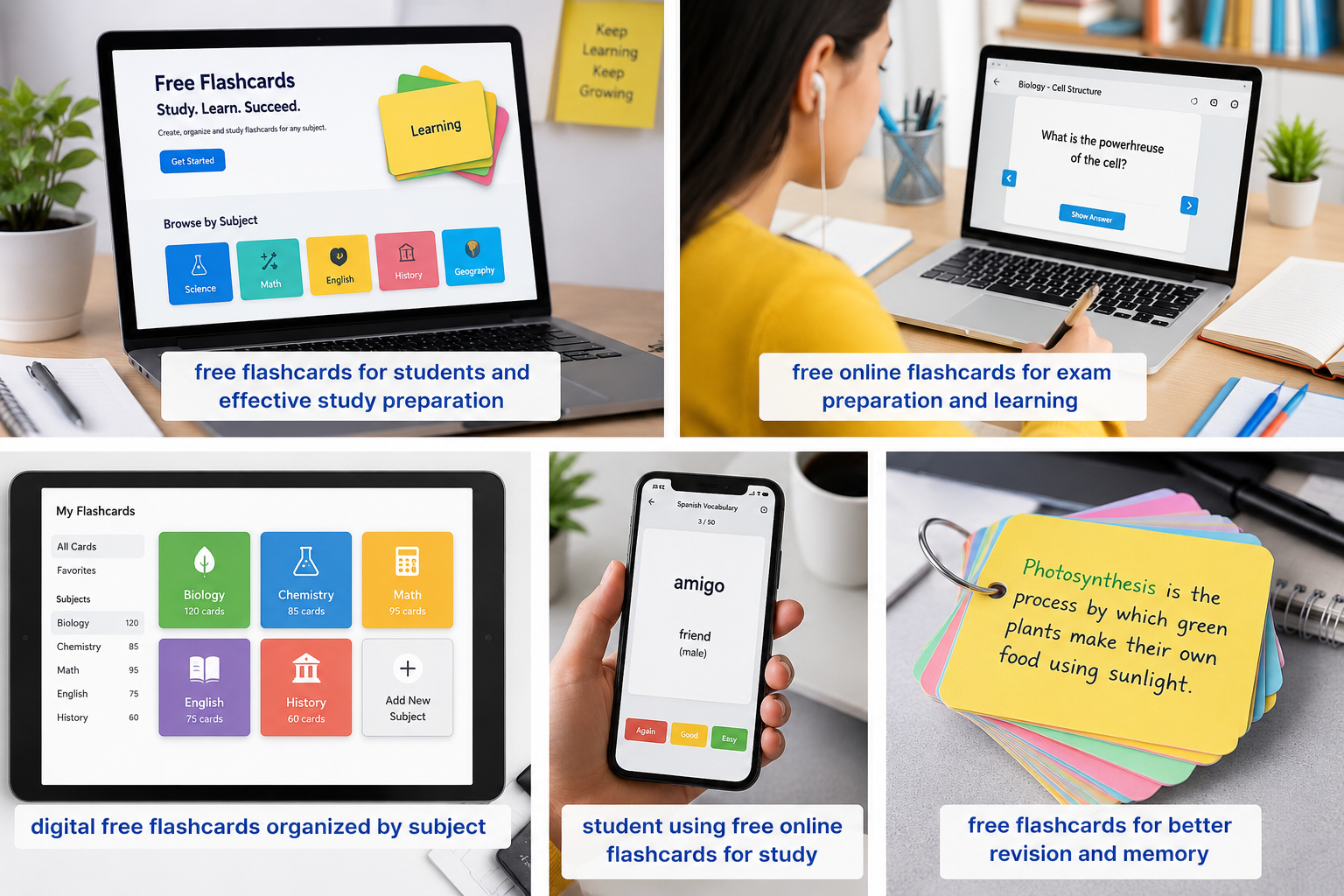
Introduction
Studying large amounts of information can be difficult when notes are unorganized or difficult to review. A flashcard template provides a simple structure for turning important information into clear questions and answers. Students can use templates for vocabulary, definitions, formulas, concepts, facts, and exam preparation.
A good template saves time because learners do not need to design every card from the beginning. Instead, they can follow a consistent format and focus more on understanding and remembering the information. With FlashCard AI, learners can also explore digital ways to create, organize, and review flashcards.
What Is a Flashcard Template?
A flashcard template is a ready-made structure used to create study cards.
A basic template usually contains:
- Front: Question, word, term, or concept
- Back: Answer, definition, explanation, or example
- Optional elements: Color, image, category, difficulty level, or notes
For example:
Front: What is photosynthesis?
Back: Photosynthesis is the process through which plants convert light energy into chemical energy.
This simple format makes information easy to review and encourages learners to actively recall the answer.
Why Use a Flashcard Template?
A template can make flashcard creation faster and more organized. Instead of deciding how every card should look, students can use the same structure for an entire deck.
Templates can be useful for:
- Exam preparation
- Language learning
- Vocabulary
- Science
- Mathematics
- History
- Professional training
- General knowledge
10 Powerful Benefits of Using a Flashcard Template
1. Saves Time
Creating every flashcard from scratch can take a lot of time.
A template gives you a ready structure, so you only need to add the information you want to study.
For example, instead of designing each card individually, you can use:
Question → Answer → Example
This allows more time for actual studying.
2. Keeps Flashcards Consistent
Consistency makes a flashcard deck easier to understand.
When every card follows the same structure, learners know where to find the question and where to find the answer.
A consistent template can include:
- Same question format
- Similar answer length
- Matching design
- Clear headings
- Consistent colors
This is particularly helpful when creating a large collection of cards.
3. Makes Information Easier to Review
A well-designed template focuses attention on the most important information.
Instead of putting an entire chapter on one card, learners can break information into smaller questions.
For example:
Poor format:
A large paragraph explaining an entire scientific process.
Better format:
Question: What is the first stage of the process?
Answer: A short explanation.
Breaking information into smaller pieces can make review more manageable.
4. Supports Active Recall
Flashcards work well when learners try to remember the answer before looking at it.
A template can encourage this by placing a clear question on the front and the answer on the back.
For example:
Front: What is the capital of France?
Back: Paris.
The learner first attempts to recall the answer and then checks the back.
This makes the flashcard more than just a piece of information to read.
5. Makes It Easier to Create Flashcards Online
Digital tools allow learners to create flashcards online without needing paper, printing, or physical storage.
Online flashcards can often be:
- Created quickly
- Edited easily
- Organized into decks
- Accessed across devices
- Updated when information changes
With FlashCard AI, learners can use digital flashcard workflows to organize study materials in a convenient format.
6. Works for Different Subjects
A flashcard template can be adapted to almost any subject.
Language Learning
Front: Word
Back: Meaning + example sentence
Science
Front: Scientific term
Back: Definition + example
Mathematics
Front: Formula
Back: Formula meaning + example
History
Front: Historical event
Back: Date + explanation
Business
Front: Business concept
Back: Definition + real-world example
This flexibility makes templates useful for students with different learning needs.
7. Makes Difficult Topics Easier to Break Down
Complex subjects can feel overwhelming when presented as large amounts of information.
A template can help learners divide difficult concepts into smaller parts.
For example, instead of creating one card about an entire chapter, you could create separate cards for:
- Key terms
- Main concepts
- Examples
- Causes
- Effects
- Important dates
This creates a more manageable study deck.
8. Makes Digital Flashcards Easier to Organize
Digital flashcards can become difficult to manage when hundreds of cards are created without a clear structure.
A template provides consistency from the beginning.
Learners can organize cards by:
- Subject
- Chapter
- Topic
- Difficulty
- Exam
- Progress level
This makes it easier to find specific information when revising.
9. Helps Create Personalized Study Materials
Templates provide structure without limiting creativity.
Students can customize their cards with:
- Colors
- Images
- Examples
- Categories
- Icons
- Short explanations
For example, difficult cards could be marked with one color, while mastered cards could use another.
The goal should be to make the design useful rather than overly complicated.
10. Makes Study Sessions More Efficient
A well-organized flashcard deck can help learners focus on important information.
Instead of searching through long notes, students can review individual questions and answers.
Short flashcard sessions can also fit into busy schedules, such as during breaks or before an exam.
Frequently Asked Questions
What is a flashcard template?
A flashcard template is a ready-made structure for creating study cards. It usually contains a question or term on one side and an answer or explanation on the other.
Why should I use a flashcard template?
Templates save time, keep cards consistent, and make large collections of flashcards easier to organize.
Can I create flashcards online?
Yes. Online tools allow users to create, edit, organize, and review digital flashcards without needing physical cards.
What should be included in a flashcard?
A flashcard should usually contain one clear question, term, or concept and a short answer or explanation.
Can flashcard templates be used for different subjects?
Yes. Templates can be adapted for languages, science, mathematics, history, business, and many other subjects.
Is a flashcard maker online useful for students?
Yes. An online flashcard maker can make creating, editing, organizing, and reviewing digital cards more convenient.
Conclusion
A flashcard template provides a simple structure for creating organized and effective study materials. By using clear questions, short answers, examples, and consistent formatting, learners can turn large amounts of information into manageable study cards.
Templates also make it easier to create flashcards online, especially when using digital tools. A flashcard maker online can provide additional convenience through editing, organization, and digital access.
With FlashCard AI, learners can explore a modern approach to creating and reviewing digital flashcards. The key is to keep cards focused, review them regularly, and use active recall instead of simply reading the answers.
For more detail visit:https://calisthenics.mn.co/posts/powerful-benefits-of-a-flashcard-template-for-smarter-studying

 Solution Law
 Daniel Jack