Click Media Lab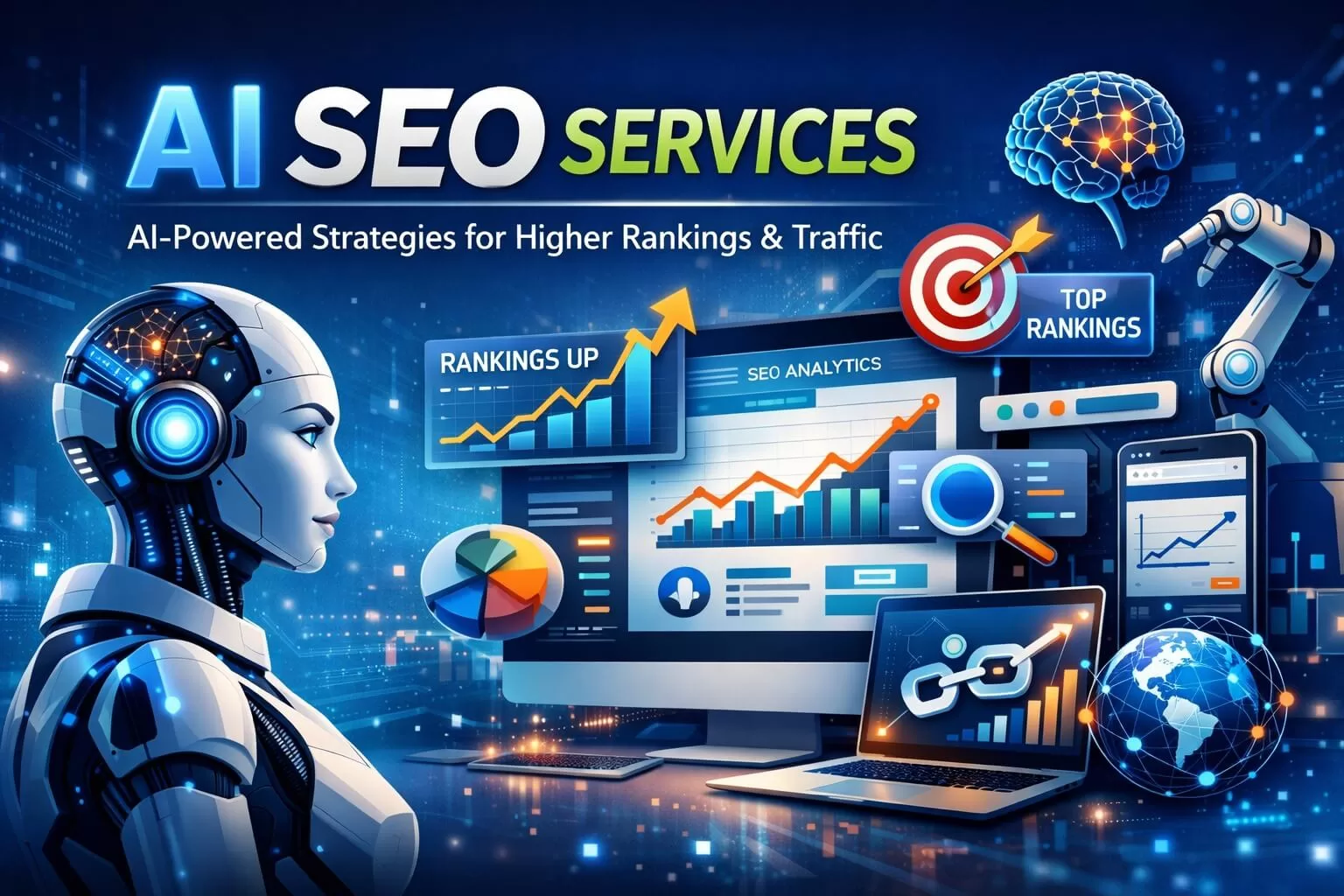
Search marketing has expanded far beyond traditional Google rankings. Businesses now need to think about how they appear in organic results, AI-generated summaries, conversational answers, and recommendation-based search experiences. This has introduced terms such as SEO, GEO, and AEO, which are related but serve different purposes. Understanding how they work together helps businesses build a stronger search strategy instead of treating every new acronym as a separate marketing channel. AI SEO services bring these approaches together to improve visibility across both traditional and AI-powered search environments.
How SEO, GEO, and AEO Affect Businesses in Canada
Canadian businesses are increasingly competing across several types of search experiences at the same time.
A customer might begin with a traditional Google query such as:
“best commercial cleaning company Toronto”
Another customer may ask:
“Which commercial cleaning companies in Toronto specialize in medical facilities?”
A third might ask an AI assistant:
“Recommend a reliable Toronto cleaning company for a medical clinic that needs recurring sanitization and after-hours service.”
Each query has similar commercial intent, but the way information is discovered and presented differs.
Consider a cleaning company with a technically optimized website that ranks well for several local terms but offers little detailed information about specific industries.
A competitor may have dedicated resources explaining:
- Medical facility cleaning
- Office sanitation
- Industrial cleaning
- Cleaning frequency
- Safety procedures
- Pricing factors
- Specialized equipment
The first company may perform well through traditional SEO. The second gives AI and answer systems additional context that can support GEO and AEO visibility.
This is why businesses such as Click Media Lab can benefit from building one connected search strategy rather than optimizing separately for every platform.
SEO vs GEO vs AEO: Understanding the Core Differences
The three approaches overlap considerably, but each emphasizes a different type of visibility.
SEO: Search Engine Optimization
SEO focuses on improving a website’s visibility within traditional search engine results.
Common SEO activities include:
- Keyword research
- Technical SEO
- Content optimization
- Link building
- Internal linking
- Local SEO
- Page speed improvements
- Search intent analysis
SEO usually aims to increase organic rankings, traffic, leads, and conversions.
For example, an accounting company may optimize a page around “corporate accountant Toronto” so it can appear prominently when someone searches that phrase.
GEO: Generative Engine Optimization
Generative Engine Optimization focuses on helping brands and information become more understandable and useful within AI-generated search experiences.
GEO places additional attention on:
- Entity recognition
- Topical authority
- Brand mentions
- Original information
- Expert credibility
- External references
- Citation-worthy content
- Semantic relationships
Instead of asking only:
“Does this page rank?”
GEO asks:
“Does the broader digital ecosystem provide enough evidence for an AI system to understand and reference this brand?”
A business may therefore strengthen GEO by publishing original research, earning reputable mentions, improving expert profiles, and building deeper topical coverage.
AEO: Answer Engine Optimization
Answer Engine Optimization focuses on making information suitable for direct answers.
AEO works particularly well for question-based searches.
For example:
What is technical SEO?
A strong answer-focused page would provide a concise definition immediately and then expand with examples, benefits, and implementation details.
AEO commonly involves:
- Question-focused headings
- Direct answers
- Concise definitions
- FAQ content
- Step-by-step explanations
- Structured information
- Clear page hierarchy
An experienced AI SEO agency should understand all three approaches because users can move between conventional search, AI-generated results, and answer engines during a single buying journey.
Common Mistakes When Choosing Between SEO, GEO, and AEO
One mistake businesses make is assuming they need to choose only one strategy.
They usually do not.
SEO, GEO, and AEO work best when they support each other.
Mistake 1: Abandoning Traditional SEO
AI search has not eliminated the importance of technical accessibility, strong content, backlinks, and organic visibility.
Before worrying about AI citations, make sure:
- Important pages can be crawled.
- URLs are properly indexed.
- Duplicate pages are controlled.
- Internal links are logical.
- Mobile performance is strong.
- Core service pages satisfy search intent.
Weak traditional SEO can undermine everything built on top of it.
Mistake 2: Creating Separate Pages for Every Acronym
Businesses sometimes create:
- SEO services
- AI SEO services
- GEO services
- AEO services
- LLM optimization services
without clearly differentiating the search intent.
This can create keyword cannibalization.
Only create separate commercial pages when each service has a genuinely distinct offering and user need.
Otherwise, use supporting educational content to explain the differences.
Mistake 3: Treating AEO as an FAQ Trick
Adding ten FAQs does not automatically make a page optimized for answer engines.
The entire page should communicate clearly.
Use direct language, logical headings, examples, and concise explanations throughout the content.
Mistake 4: Treating GEO as Keyword Optimization
GEO is broader than inserting terms such as “AI search” or “generative search.”
Businesses need credible evidence supporting their expertise.
This may include:
- Industry references
- Case studies
- Original data
- Digital PR
- Quality backlinks
- Expert commentary
- Independent mentions
A professional AI SEO agency should strengthen the brand’s wider authority instead of simply rewriting pages with new terminology.
How AI SEO Services Combine SEO, GEO, and AEO
The strongest search strategy combines all three disciplines around the customer journey.
Use SEO for Discoverability
Start by identifying topics and commercial searches relevant to your customers.
Build strong technical foundations and pages aligned with search intent.
Use AEO for Questions
Turn customer questions into clearly structured answers.
For example, instead of creating only a page titled “Commercial Roofing Services,” support it with questions such as:
- How long does a commercial roof last?
- When should a commercial roof be replaced?
- What affects commercial roofing costs?
These answers can support both search rankings and answer-driven discovery.
Use GEO for Authority and Citations
Strengthen the information surrounding your brand.
Publish original insights and create reasons for reputable third parties to mention your business.
The goal is to establish recognizable expertise around important topics.
Connect Everything With Internal Linking
A strong structure might look like:
Core service page → educational guide → comparison article → FAQ resource → case study
These relationships help users navigate while reinforcing topic connections.
Businesses should also monitor more than traditional keyword rankings.
Useful measurements now include:
- Organic traffic
- AI referrals
- Brand mentions
- Citation appearances
- Branded searches
- Qualified leads
- Conversion rates
A capable AI SEO agency can use these metrics together to determine whether greater visibility is actually contributing to business growth.
Frequently Asked Questions
Is GEO replacing SEO?
No. GEO expands search optimization for generative AI environments, while traditional SEO remains fundamental for technical accessibility, rankings, content discovery, and authority.
Is AEO the same as GEO?
No. AEO focuses primarily on direct answers, while GEO focuses more broadly on visibility and references within generative search experiences.
Which strategy should businesses prioritize?
Most businesses should begin with strong SEO fundamentals and then integrate GEO and AEO according to their search opportunities.
Can SEO content work for AI search too?
Yes. High-quality SEO content that is clear, authoritative, well structured, and genuinely useful can support visibility across multiple search environments.
Conclusion
SEO, GEO, and AEO are not competing strategies. They address different parts of the modern search journey. SEO creates a foundation for organic discoverability, AEO makes information easier to surface as direct answers, and GEO strengthens brand relevance within generative experiences. Businesses combining these disciplines through AI SEO services can build a more durable search presence while adapting to how customers increasingly discover, compare, and evaluate companies through AI.


 pakagristore