Ecotone Systems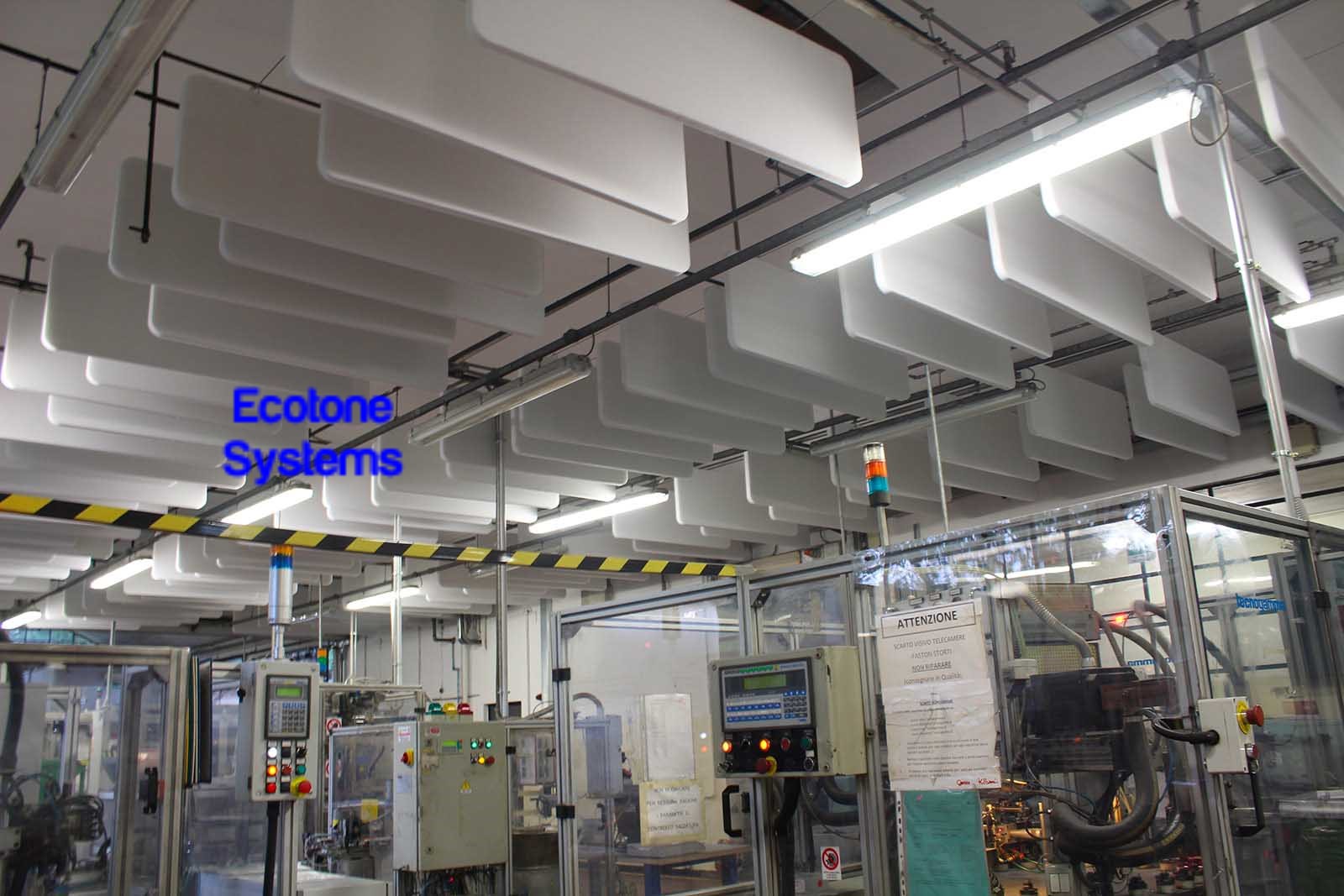
Walk into a warehouse, gym, or open-plan office with a bare concrete ceiling, and you’ll notice it immediately — every sound bounces around endlessly, turning ordinary conversation into a wall of noise. Fixing that kind of reverberation without losing valuable floor space is exactly what acoustic ceiling baffles were designed to do.
What Are Acoustic Ceiling Baffles?
Acoustic ceiling baffles are vertical, sound-absorbing panels suspended from the ceiling, usually in parallel rows, to reduce echo and reverberation in large open spaces. Unlike wall panels or floor treatments, baffles work directly overhead, intercepting sound waves before they travel across the room and bounce back down. Because they hang rather than mount flat, they expose more surface area to absorb sound, which makes them especially effective in tall spaces like factories, gyms, and auditoriums.
Why Baffles Work So Well in Large Spaces
High-ceilinged rooms are notoriously hard to treat acoustically because sound has so much open volume to travel through before it hits an absorptive surface. Acoustic ceiling baffles solve this by placing absorption material exactly where sound naturally rises — overhead. Their hanging, multi-sided design absorbs sound from multiple angles at once, which is far more efficient than a flat ceiling panel covering the same square footage.
Key Benefits of Acoustic Ceiling Baffles
Facility managers choose baffles over other acoustic treatments for several practical reasons:
- Space efficiency — baffles hang overhead, leaving walls and floor space completely usable
- Strong reverberation control — multi-sided absorption reduces echo more effectively than flat panels
- Design flexibility — available in various colours, shapes, and densities to match interior aesthetics
- Easy installation — suspended systems can be added to existing ceilings without major structural work
- Improved speech clarity — especially valuable in offices, classrooms, and control rooms
Where Acoustic Ceiling Baffles Are Commonly Used
Baffles show up wherever open volume and noise control need to coexist. Warehouses and manufacturing floors use them to cut down machinery echo without blocking sightlines. Gyms and sports halls rely on them to tame the constant clatter of equipment and voices. Restaurants and cafeterias use decorative baffles to soften noise while keeping the space visually open. Offices and call centres increasingly install them above workstations to improve speech intelligibility and reduce distraction.
Getting the Design Right
Baffle performance depends on spacing, density, and the specific frequencies a space struggles with — a warehouse dealing with low-frequency machinery rumble needs a very different baffle configuration than an office managing speech reverberation. This is where working with an experienced acoustic engineering team matters far more than simply buying panels off a catalogue.
Ecotone Systems: Engineered Ceiling Baffle Solutions
Ecotone Systems designs acoustic ceiling baffles as part of its broader industrial and commercial noise control portfolio, tailoring density, spacing, and material to each facility’s specific reverberation problem. Ecotone Systems approaches every project with on-site noise assessment first, ensuring the final baffle layout actually solves the acoustic issue rather than guessing at a standard configuration.
With decades of combined acoustic engineering experience, Ecotone Systems has delivered ceiling treatment solutions across manufacturing, commercial, and institutional spaces throughout India. From design through installation, Ecotone Systems manages the process in-house, which keeps performance consistent from the first site visit to the final handover.
Final Thoughts
Acoustic ceiling baffles offer one of the most space-efficient ways to control noise in large, open facilities. Working with a specialist like Ecotone Systems ensures the baffle system installed overhead is engineered around your space’s real acoustic behaviour, not just its square footage.

 Daniel Jack