Sonpal Singh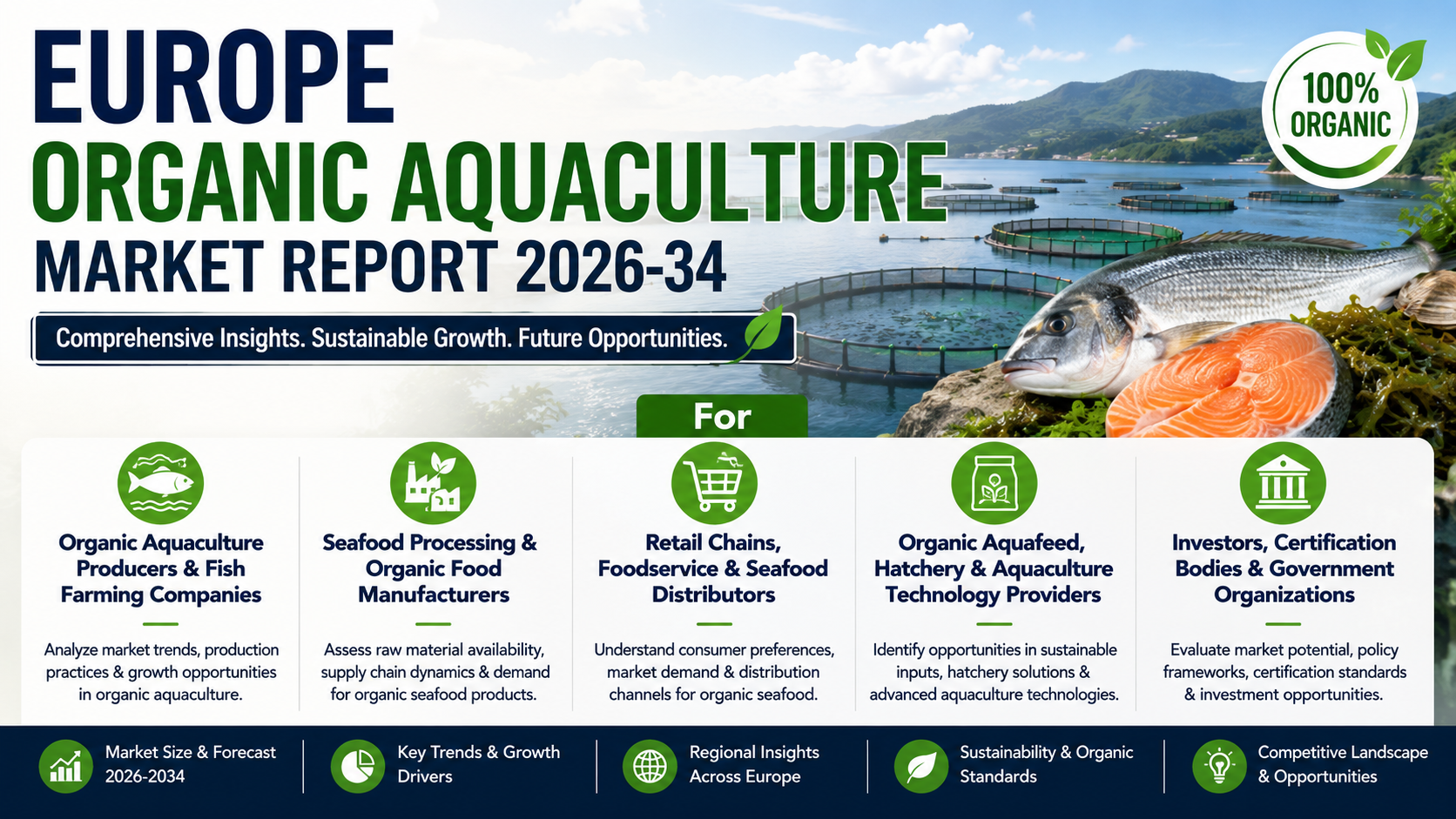
According to market research analysis by IMARC Group, the Europe organic aquaculture market volume reached 198,900 Tons in 2025.
Looking ahead, the industry is projected to undergo rapid expansion, reaching 850,700 Tons by 2034. This growth trajectory represents an extraordinary compound annual growth rate (CAGR) of 17.00% during the forecast period of 2026–2034.
Organic aquaculture refers to the cultivation of aquatic species without using synthetic fertilizers, chemical pesticides, herbicides, or genetically modified organisms (GMOs) in stocking and feeding regimes. Instead, farming practices prioritize vegetable-based feed ingredients and sustainable additives – such as organic soybean, corn, fish oil, and certified fish meal. Beyond providing superior nutritional and immune-resistant benefits to farmed aquatic animals, organic fish culture maintains a viable, balanced aquatic ecosystem by restricting harmful chemical runoff.
Key Market Growth Drivers:
The rapid adoption of organic aquaculture practices and sustainable seafood farming across Europe is propelled by several key market dynamics:
- Consumer Health Concerns and Demand for Chemical-Free Seafood
European consumers are increasingly vigilant about seafood safety and the potential pathogens or antibiotic residues associated with conventional fish farming. Growing health awareness is shifting dietary preferences toward organically raised fish, which are cultivated without synthetic additives or artificial growth enhancers. Furthermore, rising disposable income levels and improving living standards enable consumers to allocate higher per capita expenditure toward premium, certified organic seafood.
- Surge in Demand for Organic Fish Oil and Functional Byproducts
The commercial demand for certified organic fish oil and marine-derived nutrients is accelerating across multiple end-use industries, including pharmaceuticals, functional food and beverages, and nutraceuticals. As manufacturers seek high-purity omega-3 fatty acids free from heavy metals or chemical residues, organic aquafeed suppliers and fish breeders are expanding production capacity to meet stringent quality standards.
- Regulatory Support and Eco-Friendly Farming Initiatives
The European Commission and regional environmental agencies are actively enforcing policies aimed at mitigating the ecological impact of traditional chemical-based aquaculture on marine and freshwater ecosystems. In parallel, fish breeders and hatchery operators are increasingly recognizing the long-term economic and environmental benefits of eco-certified aquatic farming, driving higher investment in sustainable aquafeed, eco-friendly culture environments, and clean aquatic production systems.
Key Market Segmentation:
The Europe organic aquaculture market is comprehensively categorized across key species, product forms, culture environments, end-use sectors, and distribution channels:
By Species:
- Mussel: Widely cultivated across coastal marine systems, benefiting from low environmental impact and natural filter-feeding habits.
- Trout: Highly prominent in European freshwater fish farming, valued for high protein content and consistent commercial yield.
- Salmon: A flagship organic species commanding premium market value across consumer and commercial dining sectors.
- Oyster: Sustainable bivalve species cultivated under strict organic water quality standards.
- Carp: Popular in traditional freshwater aquaculture systems across Eastern and Central Europe.
- Seabass and Seabream: Key Mediterranean species witnessing increased organic certification due to rising regional demand.
- Others: Encompassing specialized crustaceans, finfish, and emerging aquatic species.
By Form:
- Canned: Offers extended shelf life and convenience for urban households seeking shelf-stable organic seafood.
- Frozen: Rapidly growing segment supporting long-distance logistics, retaining nutritional value, and supplying retail outlets year-round.
- Fresh or Chilled: Highly favored in premium retail markets, specialized fishmongers, and fine-dining commercial establishments.
- Others: Including smoked, cured, and processed organic seafood products.
By Culture Environment:
- Freshwater: Utilizes inland rivers, lakes, and controlled raceways for species such as trout and carp.
- Marine: Coastal and open-ocean net pens designed for organic salmon, seabass, and bivalve cultivation.
- Brackish Water: Estuarine systems optimized for specific euryhaline fish and shellfish varieties.
By End Use:
- Household: Driven by daily retail purchases, home cooking trends, and health-focused consumer meal planning.
- Commercial: Encompassing hotels, restaurants, caterers, and food service providers incorporating eco-certified organic seafood into their menus.
By Distribution Channel:
- Supermarkets and Hypermarkets: The dominant retail channel providing widespread access to certified organic fresh, frozen, and canned seafood.
- Convenience Stores: Supplying ready-to-eat and small-format packaged organic seafood items to urban commuters.
- Hotels and Restaurants: Serving high-end culinary markets where provenance, sustainability, and organic certifications are key selling points.
- Online Sales: Experiencing rapid expansion via e-commerce seafood delivery platforms and direct-to-consumer farm subscriptions.
- Others: Independent fish markets and health food specialty stores.
Sample Request For Your Business
Breakup by Country:
The adoption of organic aquaculture practices varies across key European nations:
- Ireland: A leading producer of organic salmon and mussels, backed by clean Atlantic coastal waters and rigorous organic certification standards.
- Norway: A global benchmark in aquatic production, expanding its certified organic salmon farms to meet growing European import demand.
- Romania: Emerging market with significant growth in freshwater organic carp and trout farming across inland river basins.
- Italy: Characterized by strong consumer demand for organic seabass, seabream, and premium shellfish in commercial food service and retail.
- Germany: Represents one of the largest consumer markets for certified organic seafood, driving significant imports of frozen and chilled organic fish products.
- Spain: Experiencing steady growth across marine mussel cultivation and inland freshwater aquaculture facilities.
- Others: Encompassing broader Western, Northern, and Central European countries adopting sustainable aquaculture frameworks.
Competitive Landscape: Key Players in this Market
The competitive environment in the European organic aquaculture industry features a mix of specialized organic farms, integrated seafood processors, and major multinational marine producers. Key players operating in the market include:
- Aqualande: Specialized leader in European freshwater trout breeding and sustainable aquaculture processing.
- Blackshell Farm Ltd: A prominent Irish producer of high-quality certified organic mussels.
- Biofisch GmbH: Austrian pioneer in organic freshwater fish culture and ecological aquaculture solutions.
- Cromaris D.D: A leading Mediterranean producer specializing in certified organic seabass and seabream.
- Cultimer France Producteurs Associes: Renowned French shellfish cooperative producing certified organic oysters and mussels.
- Glenarm Organic Salmon Limited: Northern Ireland’s premier producer of certified organic Atlantic salmon.
- Kaerhede Dambrug ApS (Frea Aquaculture Solutions Aps): Danish specialist in environmentally friendly freshwater aquaculture systems and trout farming.
- Kush Shellfish: Ireland’s first certified organic rope mussel producer delivering sustainable shellfish to European markets.
- Mowi ASA: Global seafood powerhouse expanding its certified organic salmon production line across North Atlantic farm sites.
- Musholm A/S (Okamura Foods Co., Ltd): Danish aquaculture firm focusing on sustainable sea-reared trout and organic production protocols.
- SalMar ASA: Major Norwegian salmon producer emphasizing eco-friendly marine pen management and organic certification compliance.
- Vilsund Blue A/S: Leading Danish producer of organically certified mussels and limfjord shellfish products.
Recent News and Industry Developments:
- Shift Toward Sustainable Vegetable-Based Feeds: European aquafeed producers are accelerating the integration of organic soybean, corn, and certified sustainable fish meal into feed formulations, drastically reducing dependence on wild-caught feed stocks and improving overall environmental compliance.
- Expansion of Eco-Certifications and Regulatory Compliance: European producers are aligning closely with strict European Union organic certification standards to provide complete transparency on fish origin, animal welfare, and farm-to-fork traceability.
- Growth in Organic Fish Oil Processing: To support the expanding pharmaceutical and nutraceutical sectors, processing facilities across Northern and Western Europe are increasing their extraction capacities for certified organic marine oils.
About Us:
IMARC Group is a global management consulting firm that helps the world’s most ambitious changemakers to create a lasting impact. The company provide a comprehensive suite of market entry and expansion services. IMARC offerings include thorough market assessment, feasibility studies, company incorporation assistance, factory setup support, regulatory approvals and licensing navigation, branding, marketing and sales strategies, competitive landscape and benchmarking analyses, pricing and cost research, and procurement research.
Contact Us:
IMARC Group‚
134 N 4th St‚ Brooklyn‚ NY 11249‚ US
Email: sales@imarcgroup․com
Tel No: (D) +91 120 433 0800
United States: (+1–201–971–6302)

 Daniel Jack
 Dale stayne